

Japan’s hot springs offer a rich variety of mineral types and a deep cultural history, with each onsen town exuding its own unique charm. This article will guide you through the allure of Japanese onsens, helping you discover the perfect hidden hot spring for your soak!
♨️The Charm of Japanese Onsens: A Relaxing and Healing Cultural Experience
When traveling in Japan, you might think that soaking in an onsen is just a simple way to relax. In reality, onsen culture is much deeper. It’s a complete experience that combines nature, healing, cultural etiquette, and the unique atmosphere of each region. From the mineral composition of the waters and bathing methods to the charm of surrounding onsen towns, it immerses visitors in an authentic Japanese wellness experience.
What Qualifies as an “Onsen”?
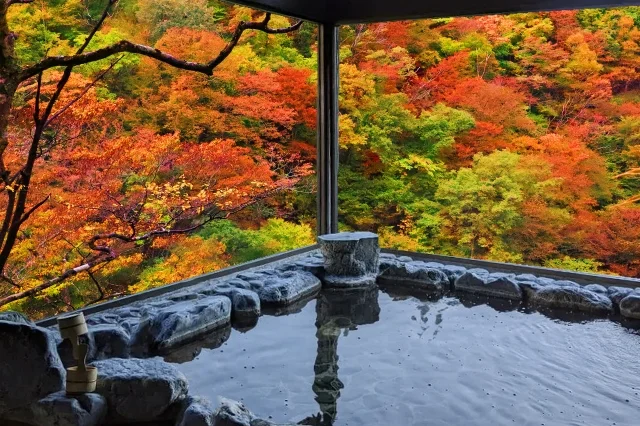
Image Source: photoAC
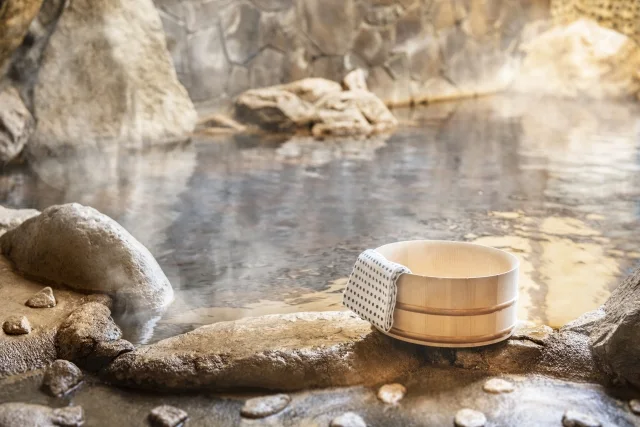
According to Japan’s Onsen Law, for a spring to be officially called an “onsen,” it must naturally flow at a temperature of 25°C or higher, or contain specific minerals such as radium, lithium, or iron.
If certain minerals in the onsen meet specified standards, it can be further classified as a “medicinal spring,” offering benefits such as relaxation, improved blood circulation, or enhanced skin condition. This strict regulation is one reason why Japan is renowned worldwide for its hot springs.
Onsen Etiquette and Cultural Tips
Japanese onsen culture places great emphasis on etiquette. Following these basic rules ensures you can fully enjoy a relaxing soak.
- Most onsens and public baths in Japan require bathing nude. However, some facilities offer areas where you can wear a swimsuit or use a towel, allowing you to choose a setting that suits your comfort and preferences.
- Before entering the bath, you must shower and clean your body. Most facilities have a communal washing area (arai-ba), where you should thoroughly wash before soaking in the onsen.
- Tattoos may restrict entry. Some public baths may deny access to guests with tattoos, so be sure to check the official website beforehand to avoid any inconvenience.
Stroll through the Onsen Town and Enjoy a Relaxing, Healing Journey
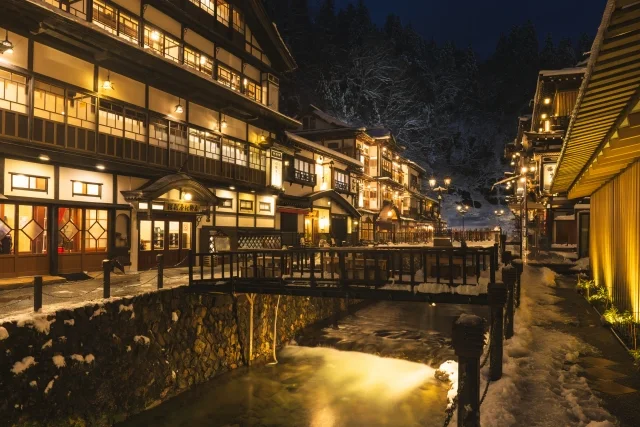
Image Source: photoAC
Whether before or after soaking in the onsen, the most charming experience is strolling through the uniquely atmospheric onsen towns. Each town offers its own scenic beauty and charm, with many still preserving traditional wooden buildings, long-established sweet shops, and visitors wandering in yukata, creating a nostalgic and romantic atmosphere.
Top 10 Must-Visit Hot Springs in 2025! Complete Guide:
Based on the 39th “Nippon Onsen 100” organized by Japan’s Kankokeizai Shimbun, this article summarizes the top 10 hot springs and highlights the top 5 with key details.
| Place | Origins | Locations |
| 1 | Kusatsu Onsen | Gunma Prefecture |
| 2 | Gero Onsen | Gifu Prefecture |
| 3 | Dogo Onsen | Ehime Prefecture |
| 4 | Beppu Hatto | Oita Prefecture |
| 5 | Noboribetsu Onsen | Noboribetsu City |
| 6 | Arima Onsen | Hyogo Prefecture |
| 7 | Awara Onsen | Fukui Prefecture |
| 8 | Ibusuki Onsen | Kagoshima Prefecture |
| 9 | Kinosaki Onsen | Hyogo Prefecture |
| 10 | Kurokawa Onsen | Kumamoto Prefecture |
Gunma Prefecture|Kusatsu Onsen-Japan’s Largest Natural Spring Flow
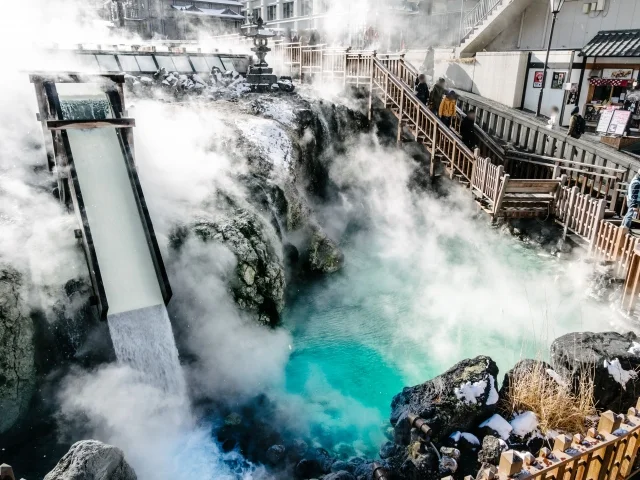
Image Source: photoAC
Kusatsu Onsen, ranked alongside Arima and Gero as one of Japan’s “Three Great Hot Springs,” features strongly acidic waters believed to have therapeutic effects. We recommend visiting Otaki no Yu, which offers multiple baths at varying temperatures from around 38°C to 46°C, allowing guests to gradually adjust to their preferred heat. After soaking, you can stroll through the nearby Nishi-no-Kawara Street hot spring district and enjoy the unique atmosphere of a traditional onsen town.
- Transportation: From Ueno Station, take the Kusatsu/Shima Limited Express to Naganohara-Kusatsuguchi, then transfer to a bus bound for Kusatsu Onsen Bus Terminal. From there, it’s about a 5-minute walk.
- Address:Kusatsu Town, Agatsuma District, Gunma Prefecture
Gifu Prefecture|Gero Onsen-Japan’s Top Three Hot Spring for Beautiful Skin
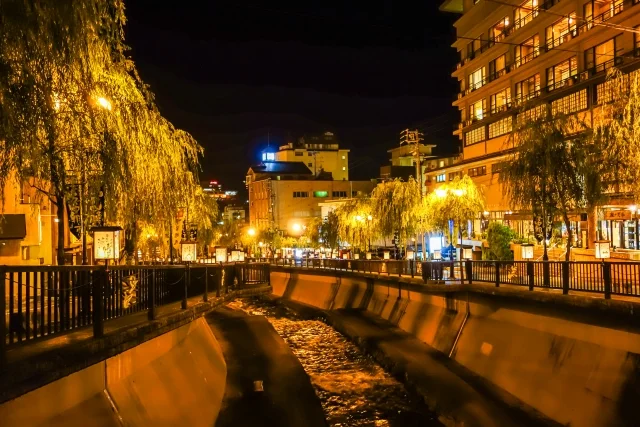
Image Source:photoAC
Gero Onsen, also one of Japan’s Three Great Hot Springs, is famous for its mild, weakly alkaline waters, said to soften the skin. The hot spring town also features free outdoor baths and several foot baths.
We also recommend visiting the nearby Gero Onsen Gassho Village, where many traditional thatched-roof houses relocated from Shirakawa-go are gathered, offering a close-up experience of Japan’s historic lifestyle and cultural charm.
- Transportation: From Nagoya Station, take the JR Limited Express Hida to Gero.
- Address:Gero City, Gifu Prefecture
Ehime Prefecture|Dogo Onsen-A Hot Spring with a Millennium of History
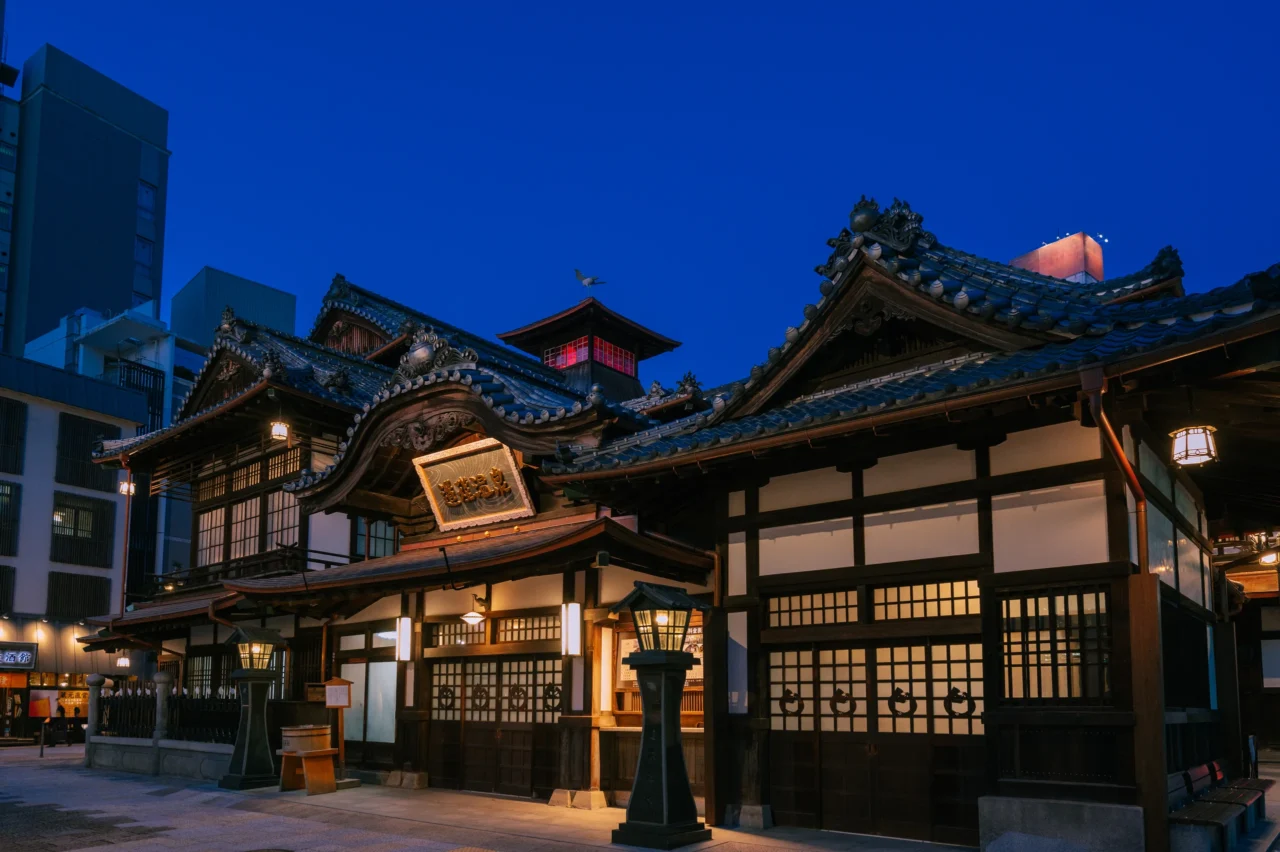
Image Source: Matsuyama City
Dogo Onsen is one of Japan’s oldest hot springs, with a history of about 3,000 years, and is said to have inspired Spirited Away. The main building, renovated in 2024, is famous for its elegant wooden architecture and baths such as Kami no Yu and Tama no Yu. In addition to soaking, visitors can enjoy tea in the lounge or tour the imperial bath, immersing themselves in a rich historical and cultural atmosphere.
- Transportation: From Matsuyama City Station or JR Matsuyama Station, take the tram to Dogo Onsen and walk about 5 minutes to reach the destination.
- Address: Dogo Yunomachi, Matsuyama City, Ehime Prefecture
Oita Prefecture|Beppu Hatto-A Wide Variety of Hot Springs
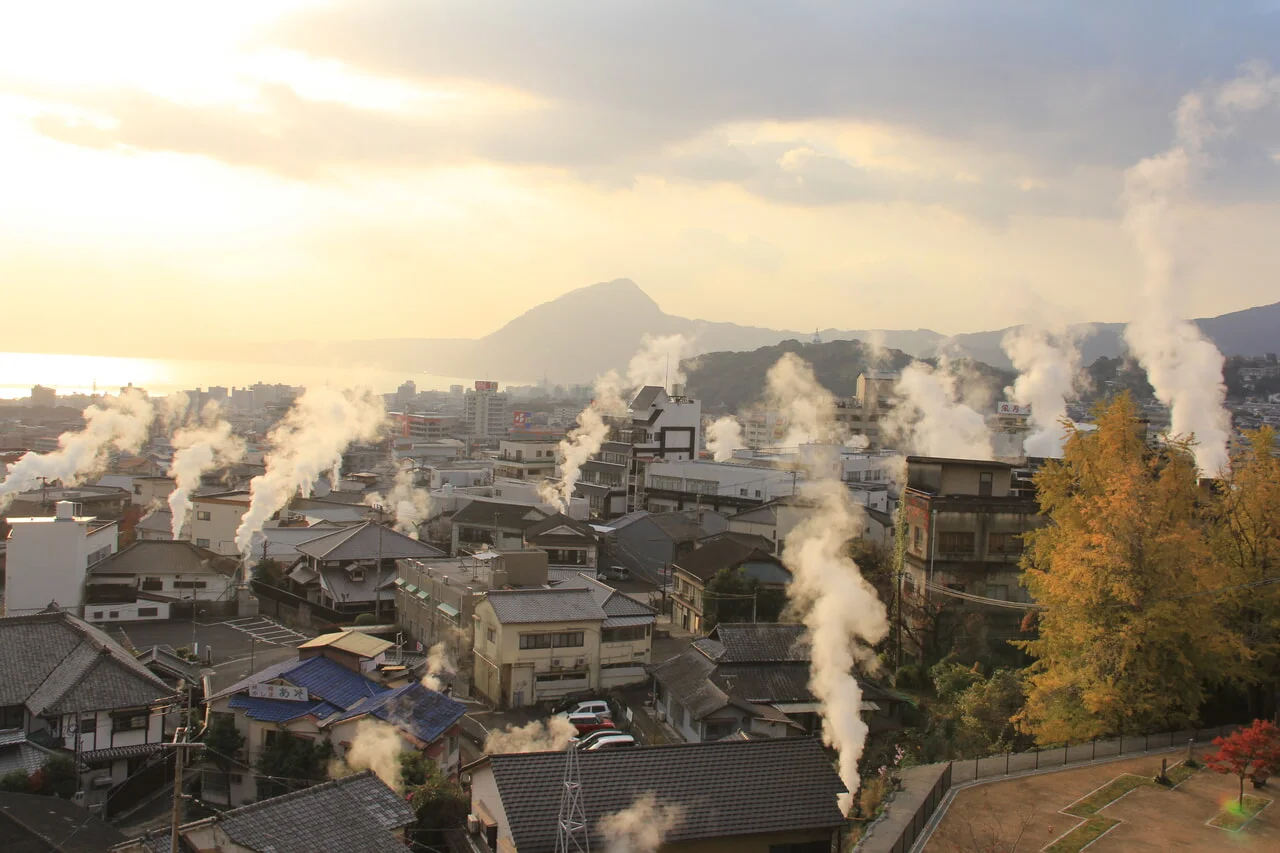
Beppu Hatto is made up of eight hot spring areas: Hamawaki, Beppu, Kankaiji, Horita, Myoban, Kannawa, Shibaseki, and Kamegawa. Among them, Kannawa Onsen, famous for its “Hell Tour,” and Myoban Onsen, with its traditional thatched-roof bathhouses, are must-visit spots. For those wanting to experience a variety of hot springs at once, Beppu Hattō is an excellent choice.
- Transportation: From Hakata Station, take the JR Limited Express Sonic to Beppu.
- Address:Beppu City, Oita Prefecture
Noboribetsu City|Noboribetsu Onsen—Experience All 10 Types of Hot Spring Waters at Once
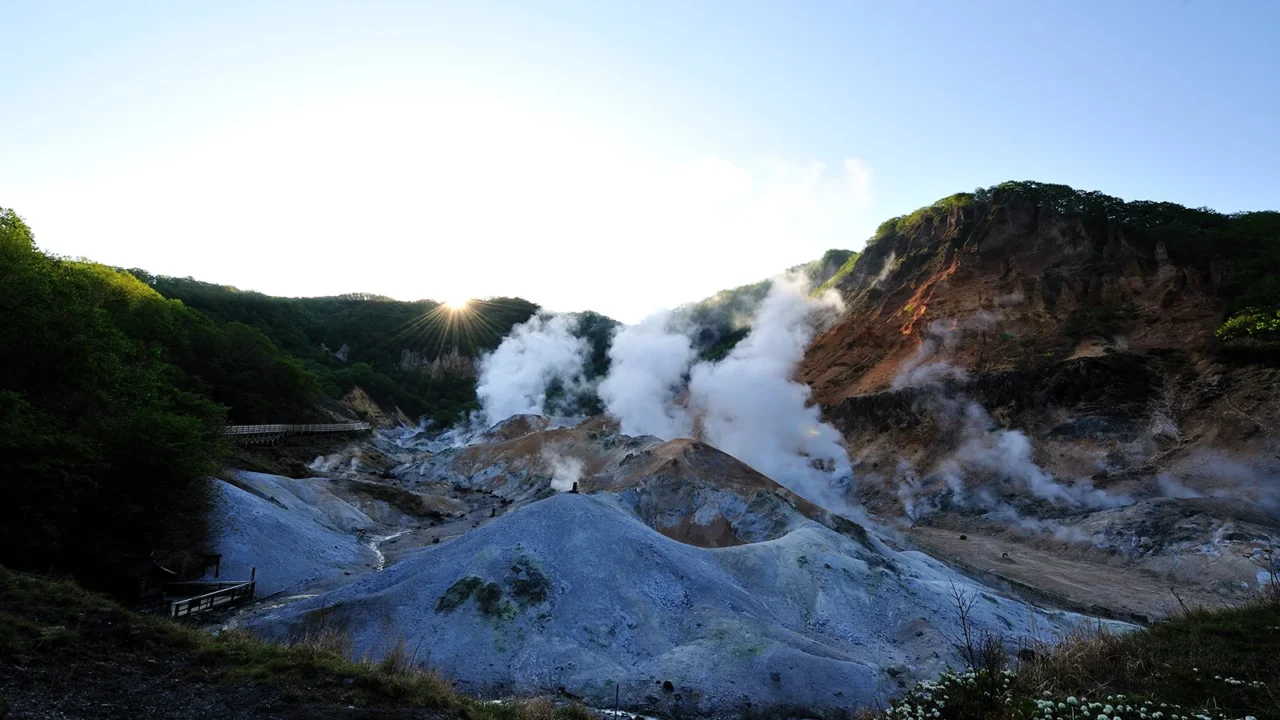
Image Source: © Noboribetsu International Tourism and Convention Association
Noboribetsu Onsen in Hokkaido is a famous hot spring destination formed by volcanic activity. The waters from Jigokudani (Hell Valley) contain up to 10 types of spring minerals, including sulfur, iron, and saline, earning it the nickname “Hot Spring Department Store.” We recommend visiting Jigokudani to experience the rising steam and the powerful energy of the volcano up close.
- Transportation: From Sapporo Station or Hakodate Station, take the JR Limited Express Hokuto to Noboribetsu, then transfer to the Donan Bus to reach Noboribetsu Onsen.
- Address: Noboribetsu Onsen, Noboribetsu City, Hokkaido
Top 5 Must-Visit Hot Springs in Japan!
Akita Prefecture |Nyuto Onsen Village – Enjoy a Hot Spring Experience Surrounded by Forests
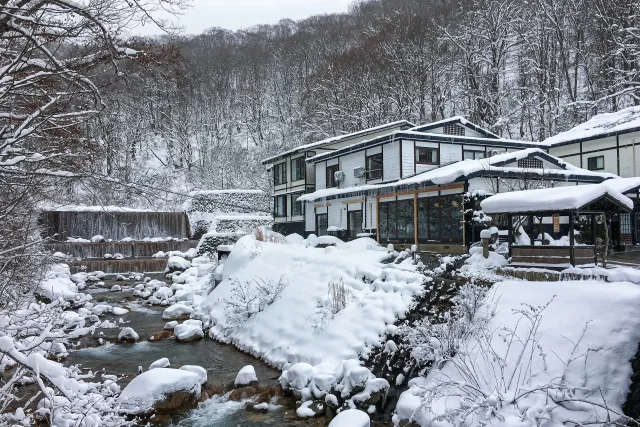
Image Source: photoAC
Located in Akita Prefecture within the Towada-Hachimantai National Park, Nyuto Onsen Village consists of seven ryokans, each with its own style. The most popular, Tsurunoyu Onsen, is the oldest inn in the village and offers four types of baths: white, black, Naka-no-yu, and Taki-no-yu.
- Transportation: Take the Akita Shinkansen to Tazawako, then transfer to a Ugo Kotsu bus to reach Nyuto Onsen.
- Address:50 Senzatsu-sawa, Tazawa, Tazawako, Semboku City, Akita Prefecture
Kagoshima Prefecture|Ibusuki Onsen-Sand Bath Hot Spring Experience
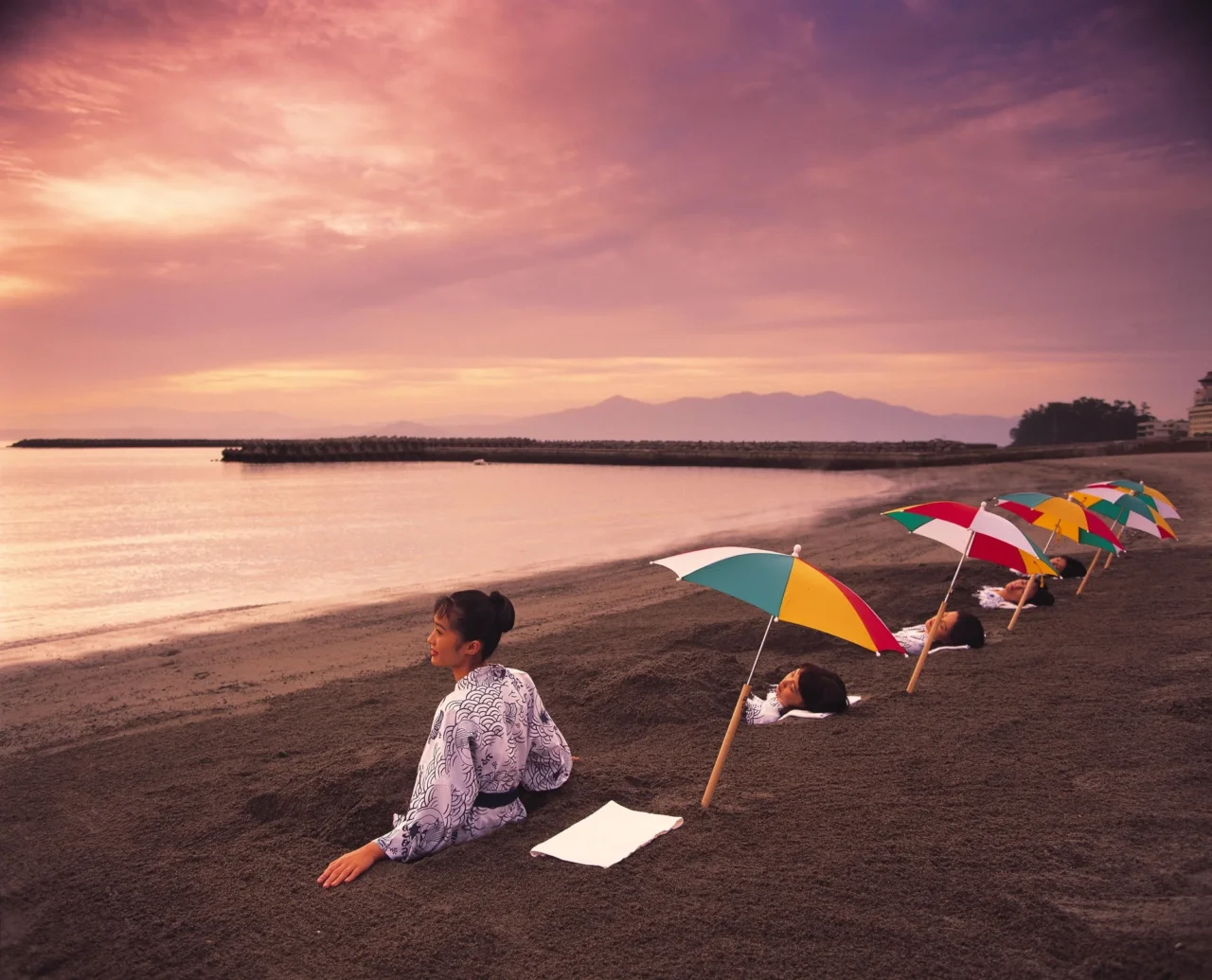
Image Source:© K.P.V.B
Ibusuki Onsen in Kagoshima is best known for its unique sand baths, which are said to promote blood circulation and induce heavy sweating. Unlike most hot springs where you simply soak in hot water, visitors first wear a yukata and lie down on warm sand heated by the hot springs to around 50–55°C. Staff then cover the body with sand using shovels, and within a short time, you’ll start to sweat profusely.
- Transportation: From Kagoshima-Chuo Station, take the JR Ibusuki Makurazaki Line / Ibusuki no Tamatebako train to Ibusuki.
- Address:Ibusuki City, Kagoshima Prefecture
Hyogo Prefecture|Kinosaki Onsen-Soak in the Hot Spring even while Standing?!
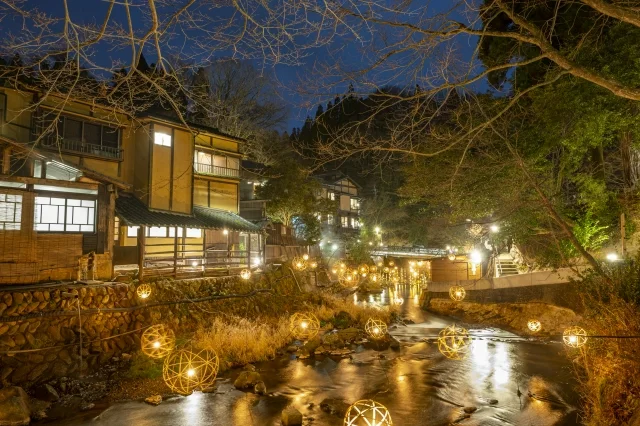
Image Source: photoAC
Kurokawa Onsen is best known for its unique standing hot spring, Tachiyu. If you’ve tried regular soaking, this offers a fresh experience. Every winter, the Yumei lantern festival lights up the town with spherical and cylindrical lanterns, casting a warm, serene glow along the streets and creating a magical evening atmosphere.
We also recommend purchasing the Nyuto Tegata pass, which grants access to designated baths. It’s an ideal way to fully explore Kurokawa Onsen.
- Transportation: It is recommended to travel by highway bus or car.
- Address:869-2402 Minamioguni Town, Aso District, Kumamoto Prefecture
Osaka City|Solaniwa Onsen OSAKA BAY TOWER-Large-Scale Artificial Hot Spring Water Park
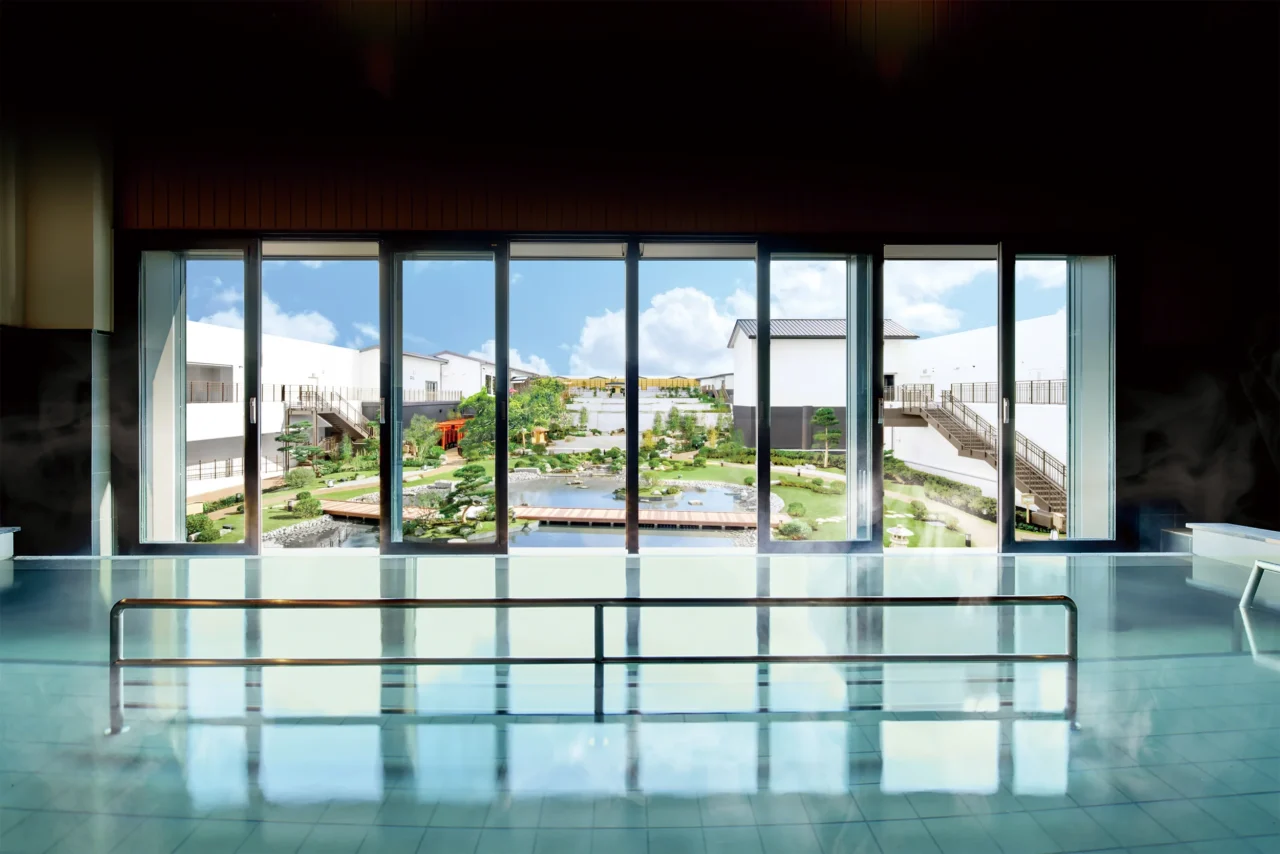
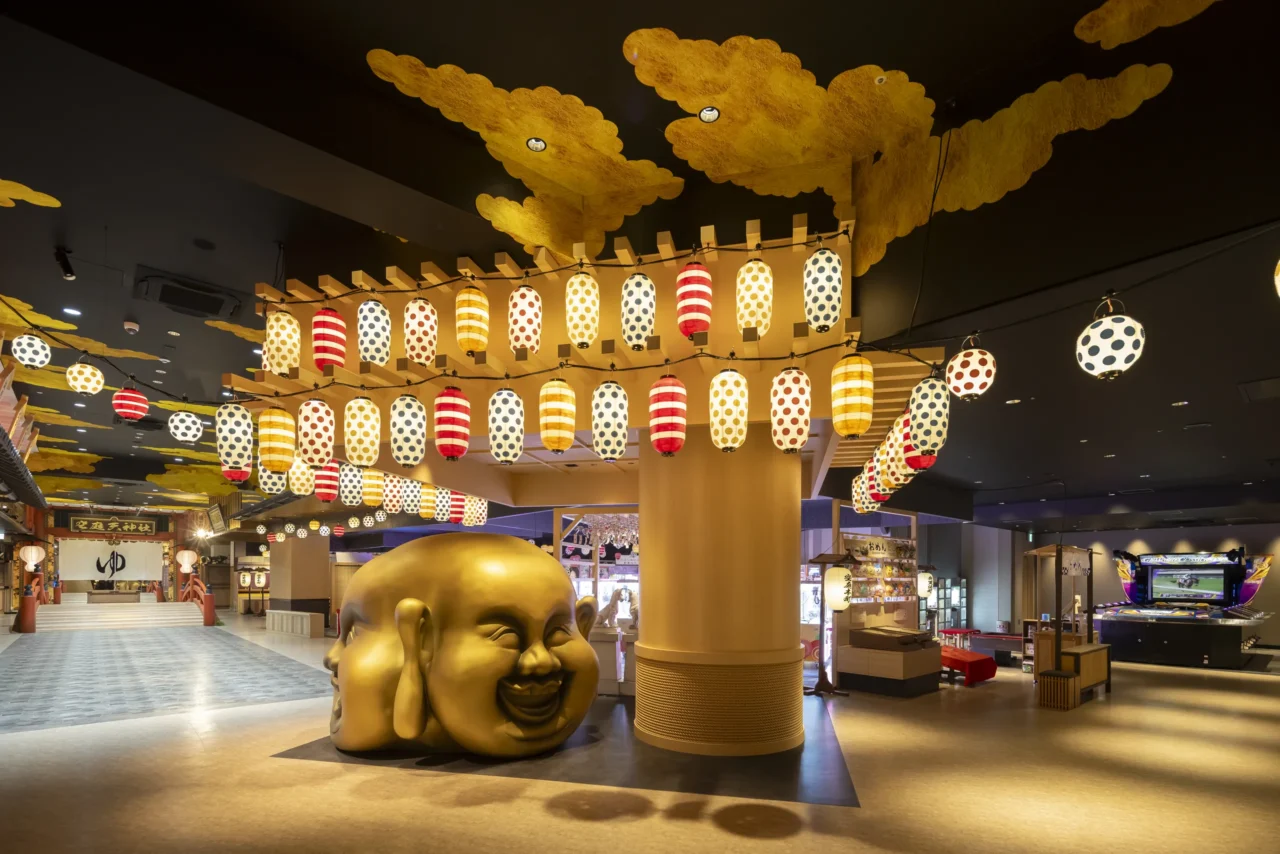
Solaniwa Onsen is an onsen-themed facility located in Osaka, featuring Edo-style streetscapes. In addition to nine types of hot springs, private baths, saunas, and rock baths, the facility also offers a game area and restaurants, allowing you to relax or have fun even after your soak.
- Transportation: Take the Osaka Loop Line to Bentencho Station, then walk to the facility.
- Address:1-2-3 Benten, Minato Ward, Osaka City, Osaka Prefecture
- ✨With the Have Fun in Kansai Pass,, you may redeem an admission ticket to Solaniwa Onsen. (Please refer to the ‘Facilities Introduction’ webpage for further details.)
Kanagawa Prefecture| Hakone Kowakien Yunessun-All Kinds of Themed Hot Springs in One Place
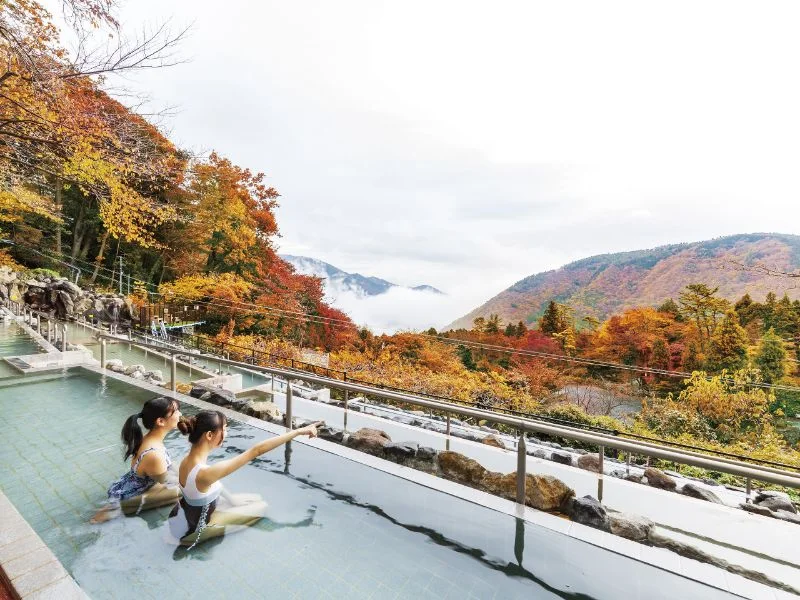
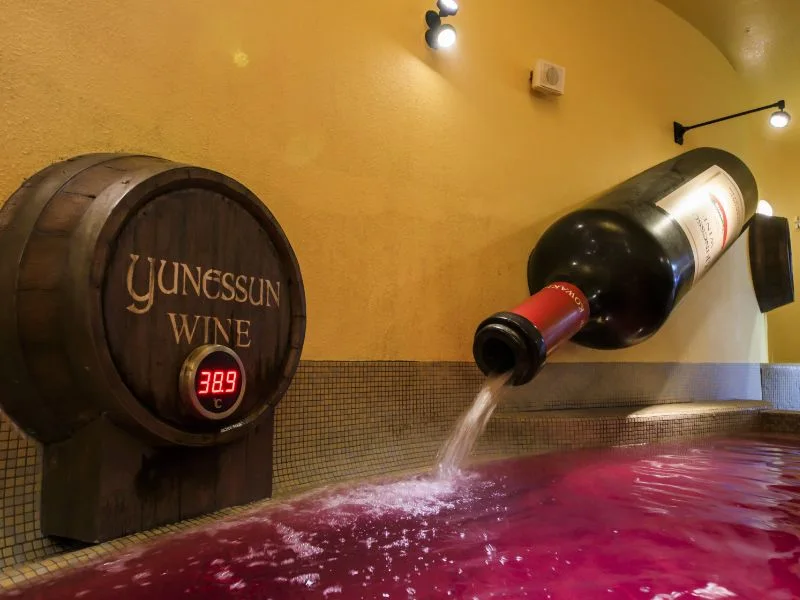
Yunessun is best known for its variety of fun-themed baths. In addition to the usual nude bathing areas, the facility offers unique options such as wine baths, coffee baths, and seasonal limited-time baths. There is also a swimsuit-friendly area, allowing those who prefer not to bathe nude to enjoy a relaxing hot spring experience.
- Transportation: Take the Shinkansen to Odawara, then transfer to the Hakone Tozan Bus or Izuhakone Bus and get off at Kowakien bus stop.
- Address:1297 Ninodaira, Hakone Town, Ashigarashimo District, Kanagawa Prefecture
- ✨With the Have Fun in Tokyo Pass, you may redeem the package ticket of Hakone Kowakien Yunessun (Yunessun+Mori no Yu)。
※Please note that the facilities in the Have Fun Pass will be updated from time to time. Please refer to the official website for the latest information.
Japanese hot springs not only warm the body and mind but also offer a deep appreciation of Japan’s natural beauty and traditional culture. On your next visit, try experiencing the unique charm of an onsen firsthand and discover even more surprises! Don’t forget to make the most of a sightseeing pass to enjoy convenient transportation, attraction tickets, delicious food, and relaxing hot springs—all in one.
FAQ
Q:What are the key etiquette rules and precautions for Japanese hot springs?
A:In most Japanese hot springs and public baths, bathing is done nude; only a few facilities allow swimsuits or the use of towels in the water. Before entering the onsen, be sure to thoroughly wash your body in the communal shower area. Regarding tattoos, rules vary by facility—some may prohibit entry for tattooed guests, while others may allow covering with special stickers or permit normal use. It’s recommended to check the official website or announcements beforehand to confirm regulations and ensure an enjoyable onsen experience.
Q:Do Japanese hot springs provide bath amenities?
A:Generally, public baths (sento) in Japan do not provide shampoo, body wash, or other toiletries, so you’ll need to bring your own or purchase them on-site. However, onsen facilities in tourist areas or ryokan often provide basic bath amenities. Since policies vary by location, it’s best to check in advance or bring your own toiletries.
Q:What are the recommended hot spring destinations in Japan?
A:According to the “Top 100 Japanese Onsen” ranking, the top 10 hot spring destinations for 2025 are: Kusatsu Onsen, Gero Onsen, Dogo Onsen, Beppu Hatto, Noboribetsu Onsen, Arima Onsen, Awara Onsen, Ibusuki Onsen, Kinosaki Onsen, and Kurokawa Onsen. You can choose the best spot based on your personal preference.
Q:Any recommended specialty hot springs in Japan?
A:In addition to traditional hot springs, Japan also offers unique bathing experiences. Examples include the hidden gem Nyuto Onsen Village, the entertainment-style Osaka Kuutei Onsen (artificial hot spring park), sand baths at Ibusuki Onsen, standing baths (*Tachiyu*) at Kurokawa Onsen in Kumamoto, and themed baths like wine or coffee at Hakone Kowakien Yunessun.