

Shopping is definitely one of the must-do activities when traveling in Japan! Whether it’s drugstores, electronics shops, or department stores, it’s hard to resist going on a shopping spree and bringing everything home.
But do you know the latest tax-free shopping rules? Starting from November 1, 2026, the Japanese government will officially implement a new tax-free system. To help you fully understand the update, this guide will quickly walk you through the key points and important notes of the new system, as well as compare the differences between the old and new rules, so you can shop and enjoy tax refunds with ease in Japan!

Image Source:photoAC
Japan Tax-Free Shopping Guide: Current Conditions & ¥5,000 Minimum Purchase Requirement
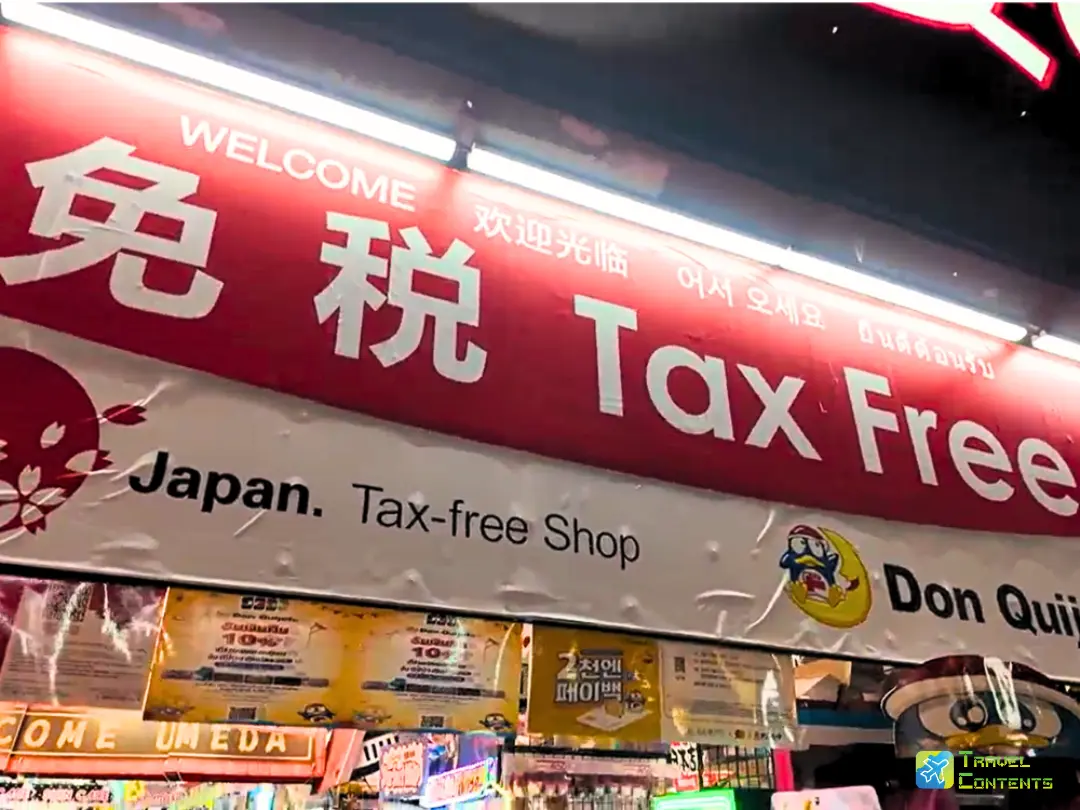
Before learning about the tax refund process in Japan, it is more important to understand the eligibility requirements and tax-free spending threshold. Many people assume that any purchase in Japan is tax-free, but in reality, factors such as a minimum pre-tax purchase of 5,000 yen per store per day, different product categories, and even packaging methods can affect whether you qualify for tax exemption.
What Are the Eligibility Requirements for Tax-Free Shopping in Japan?
To use tax-free shopping in Japan, you must first qualify as a “short-term visitor” (such as holding a tourist visa) and make purchases during your stay in Japan. In principle, tax-free items must be taken out of Japan and cannot be resold or used long-term within the country.
When shopping, you are usually required to present your passport, or use a Visit Japan Web QR code, so the store can register your tax-free purchase. This is an essential step in the tax refund process.
The key requirement for tax exemption is a minimum pre-tax purchase of ¥5,000 per store per day.
The most basic requirement for tax-free shopping in Japan is a minimum pre-tax purchase of ¥5,000 in the same store on the same day. If you meet this threshold, you may qualify for tax exemption. However, please note that if the amount is below the requirement, even by a small margin, you will not be eligible for the tax-free benefit.
General goods vs. consumables: What’s the difference? Packaging rules are key
Under Japan’s current tax-free shopping system, goods are classified into “general goods” and “consumables.” The main difference lies in their usage and packaging requirements:
- General goods (e.g., clothing, electronics, bags)
👉Can be used within Japan.
👉No special sealed packaging is required.
👉No special inspection is usually required when departing the country.
- Consumables (e.g., cosmetics, food, and drugstore items)
👉Cannot be used within Japan.
👉Most items are packaged in sealed bags.
👉If opened or used, it may affect eligibility for a tax refund.
Japan’s Visit Japan Web tax-free QR code makes your shopping tax refunds faster!
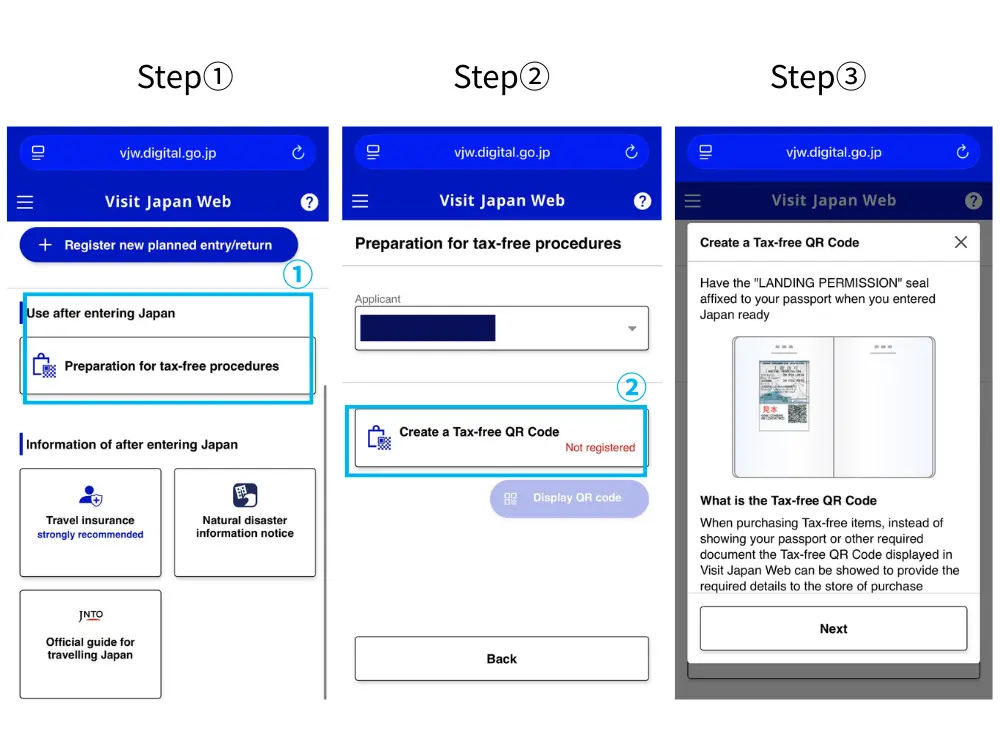
If you’ve ever struggled to find your passport during a tax refund process, this new and more convenient tool — the ‘Visit Japan Web Tax-Free QR Code’ — is something you won’t want to miss!
What is the Visit Japan Web Tax-Free QR Code?
The tax-free QR code provided by Visit Japan Web integrates your passport information, entry records, and tax refund details into a single personal code. When you check out at a tax-free store, you simply present the QR code for the staff to scan, allowing you to quickly complete the tax refund registration for your purchases in Japan. For travelers who shop frequently or visit multiple stores in a single day, this is a great tool that can help save a lot of time!
3 Steps to Apply for a Tax-Free QR Code (Illustrated Guide)
- Step 1 | Log in to Visit Japan Web and go to “Tax-Free Procedures”
After logging into your account, go to the ‘After Entry’ section in the system, select ‘Tax-Free Procedures,’ and start creating your tax refund information.
- Step 2|Fill in your information and create the tax-free QR code
Follow the system instructions to confirm your personal information and passport details, then click ‘Create Tax-Free QR Code.’ The system will automatically generate your personal QR code.
- Step 3|Obtain your QR code and present it for scanning at checkout
Once completed, you can display the QR code on your phone. At tax-free stores, simply show it at checkout for staff to scan and complete the tax refund registration process for your purchases in Japan!
※Your passport must have an immigration entry sticker in order to scan and create the tax-free QR Code.
※Please note that screenshots of the QR code are not accepted when presenting it to stores. In addition, not all stores support QR-code tax-free procedures, so it is recommended to check with staff in advance.
Japan’s tax refund system will change starting November 1, 2026! Be sure to understand these key points before shopping.
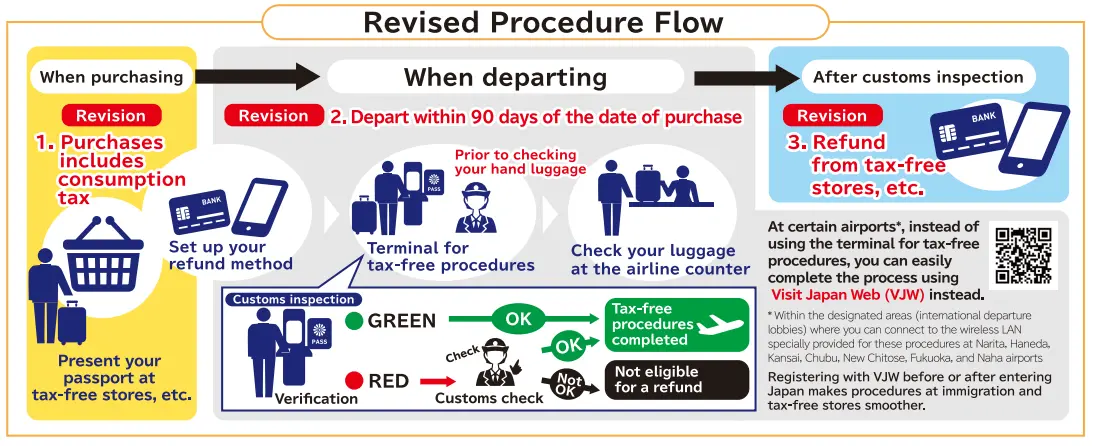
Image Source:観光庁ウェブサイト
The system will shift from the previous ‘tax-free at checkout’ model to a ‘pay first, refund later’ process. This new shopping tax refund procedure not only changes how you pay at the time of purchase, but also affects how travelers handle tax refunds at the airport, as well as their time planning.
What’s the difference between the old and new systems? ‘Pay first, refund later’ is the biggest change
The biggest change to Japan’s 2026 tax-free shopping system is the shift from tax exemption at checkout to a ‘pay first, refund later’ model. This means travelers will need to pay the tax-included price at the time of purchase and then claim their refund collectively upon departure from Japan. Under this new system, the tax refund process will be centralized at the airport, and there will also be a requirement to complete the refund within 90 days from the date of purchase. Compared with the previous system, although the process is more unified, travelers will need to allow extra time to handle the refund procedures.
How Does the Airport KIOSK Tax Refund Process Work?
Under the new system, tax-free shopping in Japan will mainly be processed through airport KIOSK self-service machines. Travelers only need to scan their passport when departing, and the system will automatically retrieve their purchase records and determine whether manual inspection is required. If no inspection is needed, they can proceed directly with the refund process. If inspection is required, travelers must cooperate with customs for manual verification. Once the review is completed, the system will proceed with the refund process, making the overall procedure more digitalized and centralized.
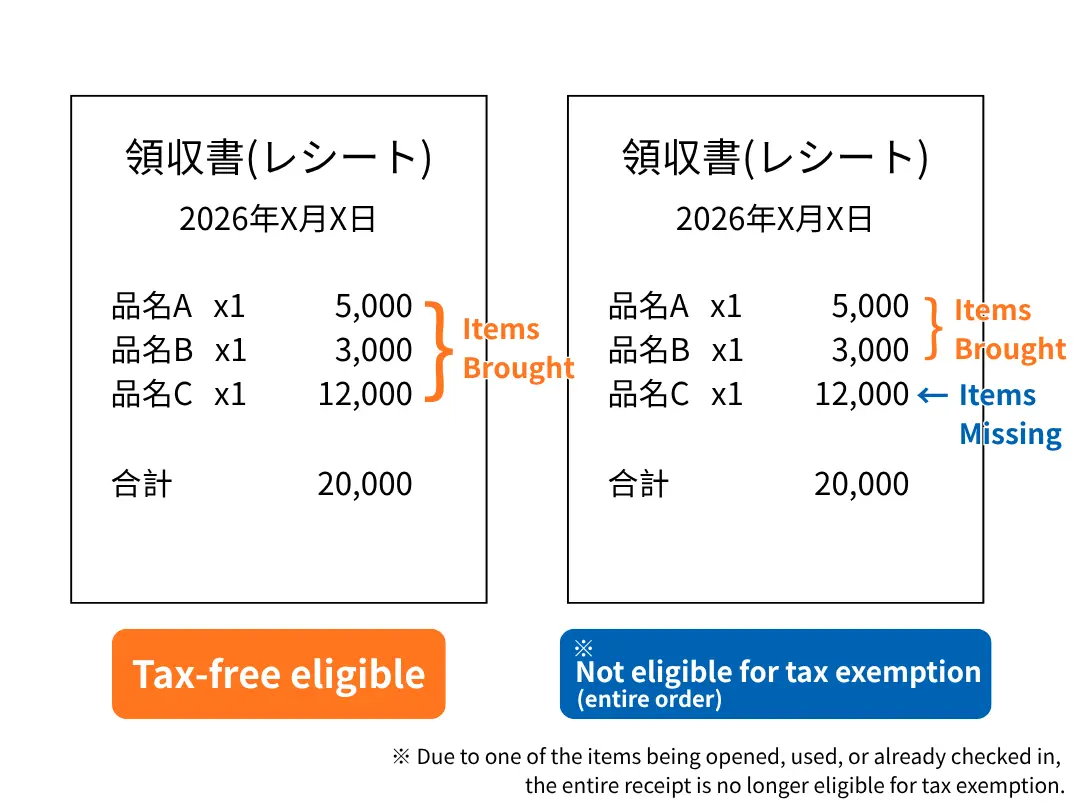
If, within the same purchase, some items have been opened or do not comply with carrying requirements, it may even result in the entire transaction becoming ineligible for a tax refund. This is a detail that many travelers tend to overlook. It is recommended to arrive at the airport early on the day of departure to allow sufficient time for the tax refund process. Although the new system may increase processing time at the airport, removing sealed packaging not only reduces the waiting time for store-assisted packaging, but also provides greater flexibility when packing luggage, ultimately improving overall shopping convenience.
Compared to the old system, is the new one more convenient or more troublesome?
“The 2026 new tax-free shopping system in Japan strikes a balance between convenience and regulation. On one hand, it removes the requirement for sealed packaging of tax-free items, giving travelers more flexibility when shopping and packing luggage, while also reducing waiting time for in-store packaging. On the other hand, the tax refund process is centralized at the airport, and inspection procedures are made stricter. Although this may increase time pressure at departure, it allows travelers to better plan their schedules while still benefiting from improved convenience.
Anti-Resale Measures: When You May Not Qualify for a Tax Refund
To prevent abuse of the tax-free system, the new regulations have strengthened rules regarding product use and carrying requirements. For example, if items are not taken out of the country, have been opened or used, or if complete purchase records cannot be provided, tax refund eligibility may be affected. In addition, purchases intended for resale or non-personal use are subject to stricter inspection standards. Therefore, travelers should ensure that their purchases comply with the relevant regulations when applying for tax refunds in Japan, in order to avoid the risk of the entire transaction becoming ineligible for a refund.
No More Separation Between General Goods and Consumables, and Special Packaging for Consumables
In addition to eliminating the distinction between product categories, the previous purchase limit of 500,000 yen has also been abolished. Under the new rules, as long as the total purchase amount at the same store on the same day exceeds 5,000 yen (excluding tax), it will qualify for tax exemption. The special sealed packaging for consumable goods has also been discontinued.
Although the revised system may increase processing time at the airport, removing sealed packaging not only reduces the waiting time for in-store assistance, but also provides greater flexibility when organizing luggage, ultimately improving overall shopping convenience.
Cash vs Credit Card vs E-Payment|Which Is Best for Tax-Free Shopping Refunds in Japan?
Cash refund: The most immediate option, but be mindful of exchange rates
The biggest advantage of choosing a cash refund is that you can receive the cash immediately after completing your tax-free shopping refund in Japan, making it convenient for continued use during your trip. This option is especially suitable for travelers who still have planned expenses. However, if the money is not fully used during the trip and is exchanged again after returning home, exchange rate losses may occur. In addition, some airports or counters may charge handling fees, so it is still important to assess your actual needs before choosing this option.
Credit card refund: Convenient and secure, but the refund process takes longer
A credit card refund returns the tax directly to the original card account. Its advantage is that it eliminates the need to carry large amounts of cash, making it safer and more suitable for higher-value refunds. However, the drawback is that the refund process takes some time to complete, and the final amount is calculated based on the exchange rate at the time the bank processes the transaction, which may differ from the rate at the time of purchase. Therefore, when using tax refunds in Japan, both timing and exchange rate factors should be taken into consideration.
E-payment refund: An emerging option with high convenience but limited availability
In line with Japan’s 2026 tax refund system, travelers will be able to receive refunds via e-payment methods in the future. This option is generally faster and eliminates the need to carry cash. However, in the initial stage, supported payment platforms may be limited, and there may be differences in service fees or exchange rates depending on the platform. It is therefore strongly recommended to check the supported services and actual costs in advance.
❗Reminder: Under Japan’s 2026 tax refund system, as the process will be centralized at the airport, travelers are strongly advised to allow sufficient time for tax refund procedures to avoid affecting their boarding schedule. It is also recommended to consider travel inconvenience insurance to cover unexpected situations such as flight delays or procedural changes, ensuring a smoother and more worry-free trip.
Japan Tax-Free Shopping FAQs
Q:What is the tax-free shopping threshold in Japan?
You can apply for tax-free shopping when your total purchase at the same store on the same day reaches 5,000 yen (excluding tax) or more.
Under the previous system, if your purchases included consumable goods such as cosmetics or food, there was a daily purchase limit of 500,000 yen, and the items would be packed in special sealed bags. These items could not be opened or used before leaving Japan; otherwise, you might be required by customs to pay consumption tax.
Under the new system (effective November 1, 2026), the distinction between general goods and consumables will be removed, along with the 500,000 yen purchase limit for consumables. In addition, special sealed packaging will no longer be required.
Q:How do you get a tax refund when shopping in Japan?
Currently, there are two common ways to obtain a tax refund in Japan. One is to present your passport or tax-free QR code at checkout and pay the tax-exempt price directly, which is commonly used in clothing stores, drugstores, and tax-free shops. The other is to pay the tax-included price first and then apply for a refund at a designated counter, with the refund issued in cash or credited back to a credit card, which is typically used in department stores and shopping malls.
Under the new system (effective November 1, 2026), the process will shift to a ‘pay first, refund later’ model. Travelers will pay the tax-included price at the time of purchase and then claim their tax refund collectively at the airport.
Q:Why are there two tax rates shown on the receipt?
This is because Japan uses a dual consumption tax system. A 10% tax rate applies to general goods such as electronics and clothing, while a reduced 8% tax rate applies to certain items like takeout food and non-alcoholic beverages. Therefore, if you purchase different types of products at the same time, the receipt will show the two tax rates separately.
Q:Do All Stores in Japan Offer Tax-Free Shopping?
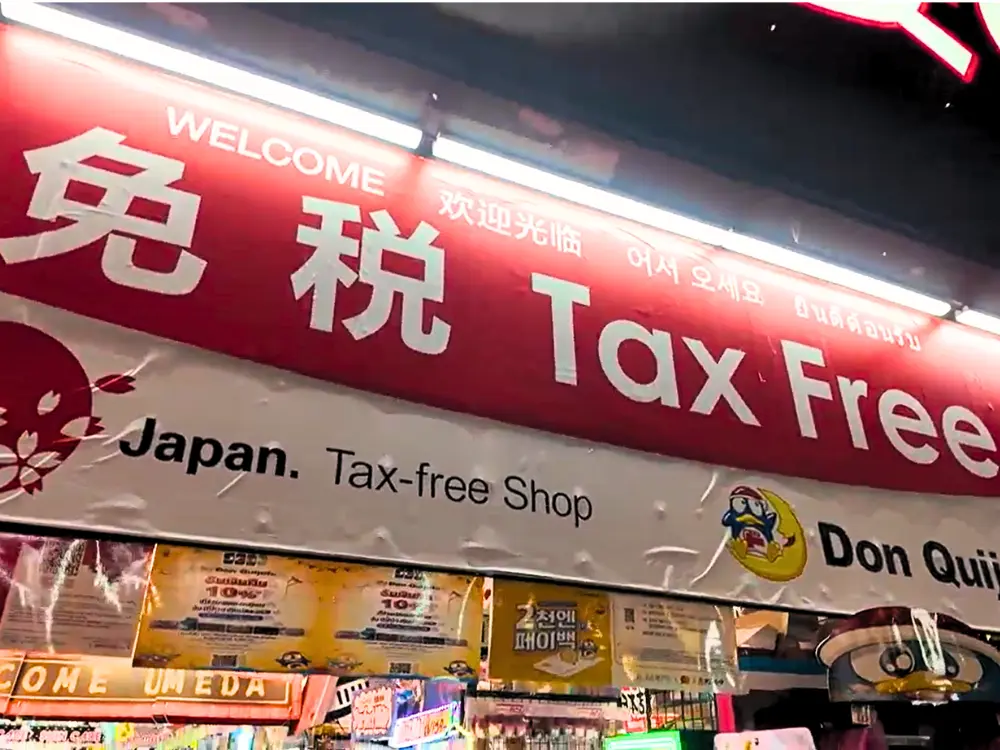
Not necessarily. Tax refund services are usually only available at stores displaying the ‘Tax-Free Shop’ sign, or at department stores and shopping malls with dedicated tax-free counters. It is recommended to check in advance whether the store offers tax refund services.
Q:Are there any coupons recommended for foreign travelers in Japan?
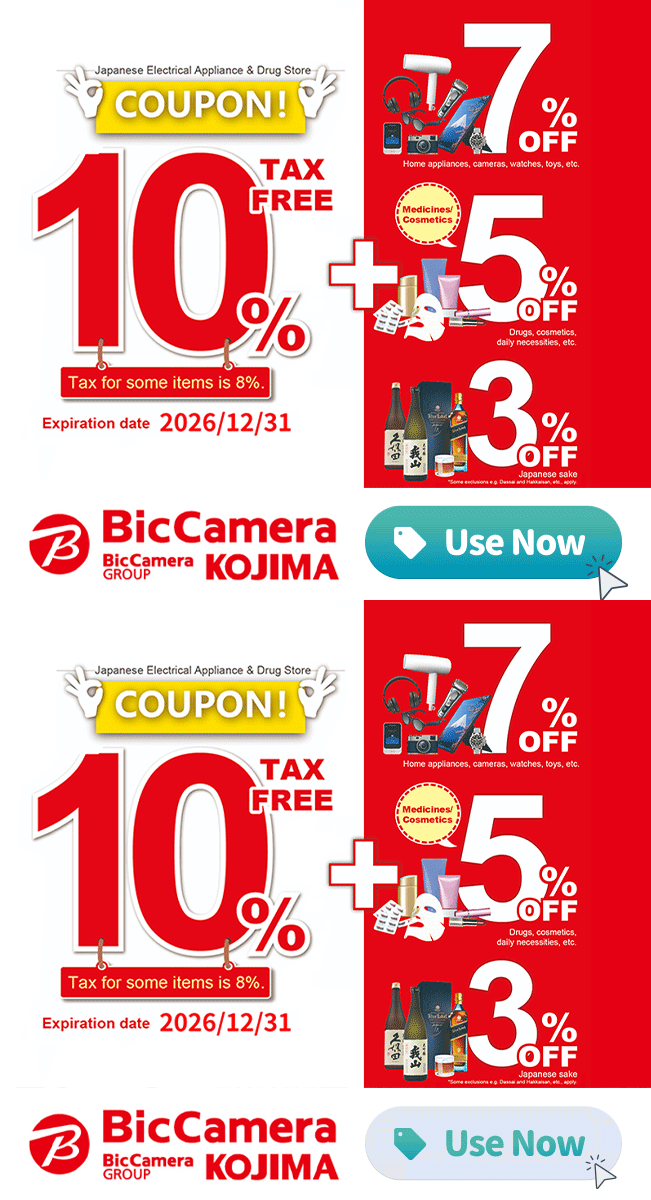
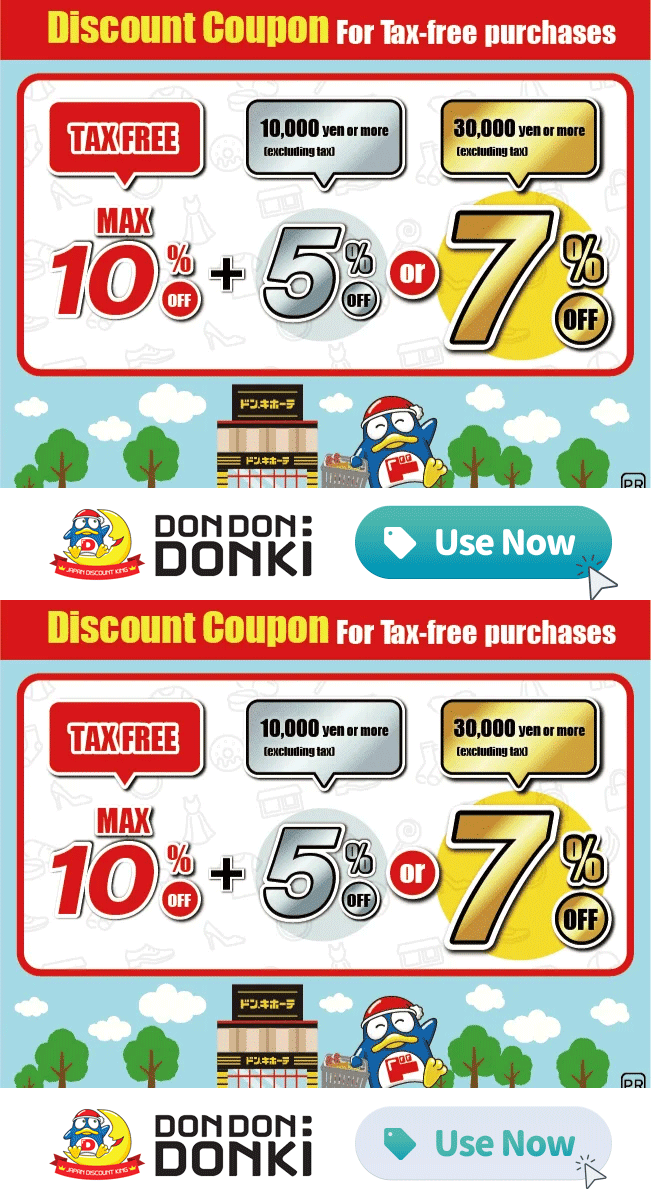
Yes. If you want to check coupons across multiple regions in Japan at once, you can use the Travel Contents. Travel Contents offers great discount coupons for stores such as Don Quijote, Bic Camera, Keio Department Store, AEON, and Sugi Pharmacy, helping travelers save more during their trip to Japan!
The latest adjustments to Japan’s tax-free shopping system shift the process from ‘tax exemption at checkout’ to a ‘pay first, refund later’ model. Although this adds a few extra steps, it also enables a more digitalized and standardized management system. As long as travelers understand the tax-free threshold in advance, know how to apply for the Visit Japan Web QR code, and are familiar with the airport KIOSK refund process, getting a tax refund in Japan is not difficult. In fact, it can make the overall shopping experience even smoother!