

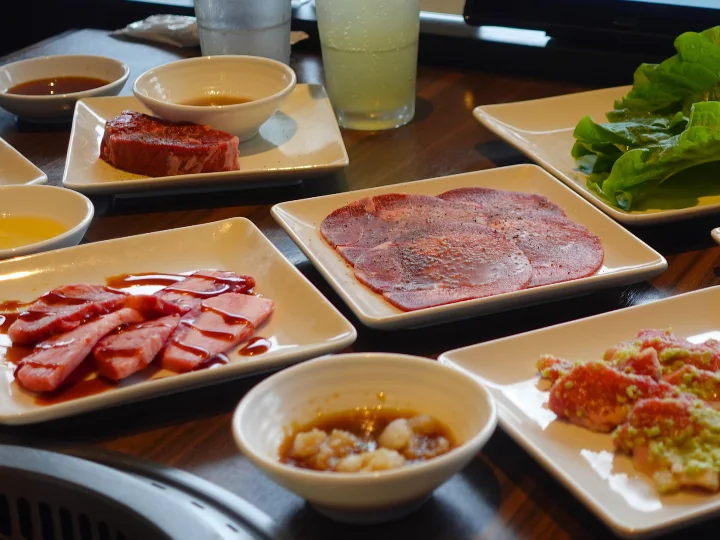
Want to enjoy authentic wagyu yakiniku in Japan but can’t make sense of the cut names on Japanese menus? Feeling overwhelmed by endless options and not sure what to order? Don’t worry! This guide brings everything together in one place—20 common yakiniku cuts with Japanese–Chinese name comparisons, texture and flavor explanations, essential wagyu knowledge, plus recommendations for 5 of Japan’s most popular yakiniku restaurants. With this article in hand, you’ll be able to order with confidence and enjoy wagyu like a pro!
A Complete Guide to the Unique Features of Japanese Yakiniku!
Different Flavors: Salted (Shio, しお) / Sauce (Tare, たれ)
Most Japanese yakiniku restaurants offer two main flavor options: shio (salted) and tare (sauce). Shio highlights the natural flavor and aroma of the meat, while tare uses a special marinade to create a richer, more savory taste that goes perfectly with rice.
Grilling Tip: Cook the salted (shio) meat first, then the sauced (tare) meat! This is because grilling shio first allows you to fully enjoy the meat’s natural flavor, while marinated meat can leave residue on the grill, so it’s best to cook it afterward.If you’d like the staff to help change the grill, you can say:「すみません、網を替えてください!」(Sumimasen, ami wo kaetekudasai)
Introduction to Offal (Horumon, ホルモン)
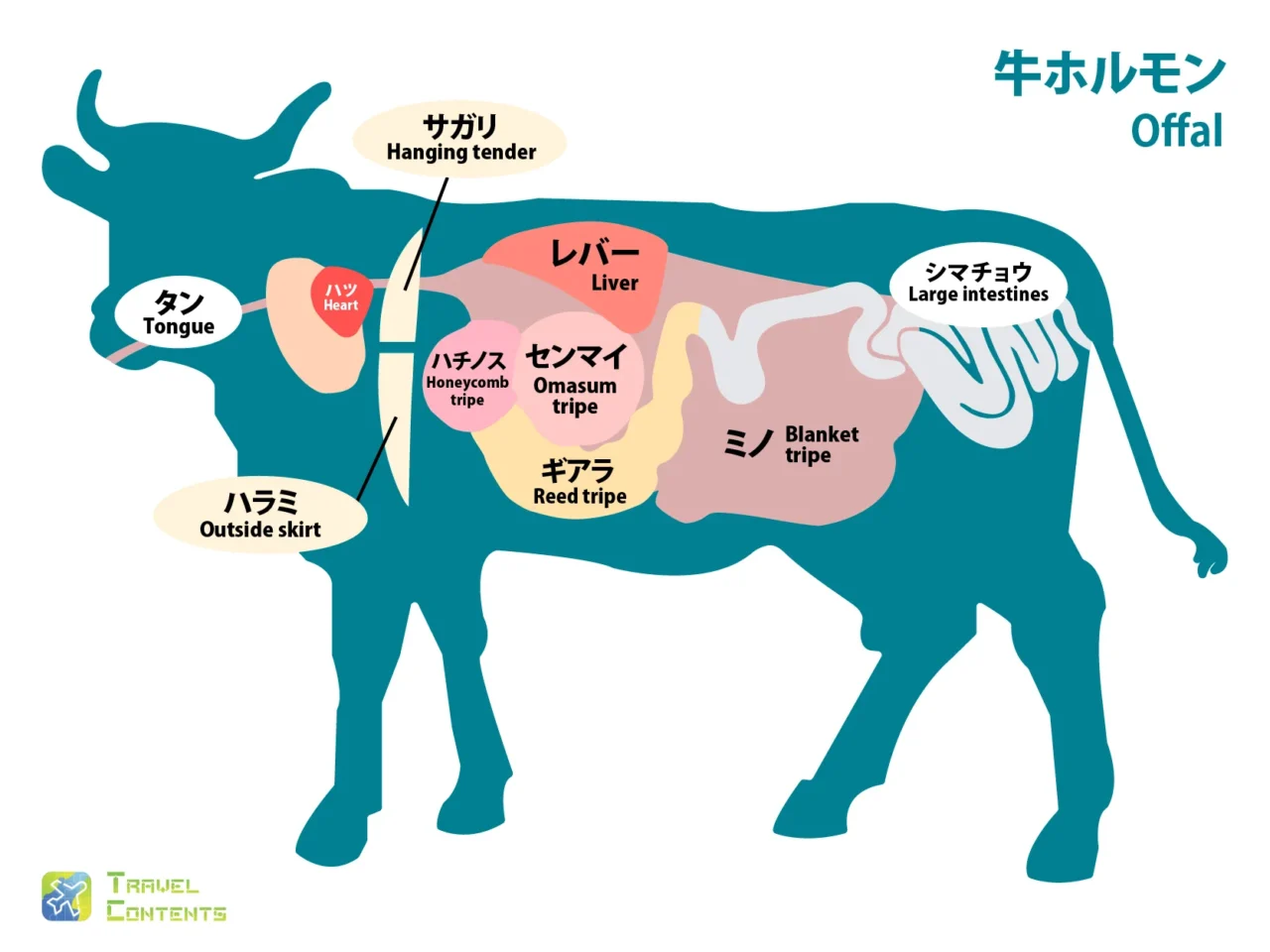
「ホルモン(horumon)」usually refers to the offal of beef or pork and is a must-try for Japanese yakiniku fans! Here’s a summary of the common cuts:
| Japanese | English |
| タン(gyūtan) | Tongue |
| Crispy on the outside, tender and juicy on the inside, with a subtle sweetness and a pleasant chew. | |
| ハツ(hatsu) | Heart |
| Almost no gamey taste, with a crisp and springy texture. | |
| サガリ(sagari) | Hanging tender |
| Low in fat, tender yet slightly chewy, and not greasy. | |
| ハラミ(harami) | Outside skirt |
| Evenly marbled with fat, tender with a slight chew, juicy, and richly flavorful. | |
| ミノ(mino) | Blanket tripe |
| The first stomach of a cow and the largest of the four stomachs. Firm and elastic with a crunchy texture, becoming more flavorful the more you chew. | |
| ハチノス(hachinosu) | Honeycomb tripe |
| The cow’s second stomach, with a honeycomb-like appearance. Chewy and springy in texture. | |
| センマイ(senmai) | Omasum tripe |
| The cow’s third stomach, with layers stacked together. Light in flavor, thin and crisp in texture, and low in fat. | |
| ギアラ(giara) | Reed tripe |
| The cow’s fourth stomach, containing the most fat among the four. The meat is firmer and has the richest flavor. | |
| レバー(rebā) | Liver |
| Smooth and delicate, with a distinctive aroma. | |
| シマチョウ(shimachō) | Large intestines |
| Crispy on the outside, soft on the inside, and rich in fat. | |
Wagyu (わぎゅう) / Beef Cut Introduction
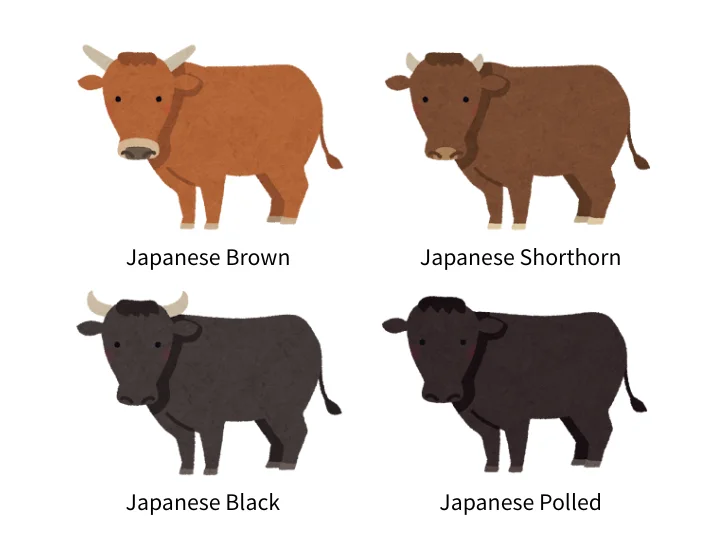
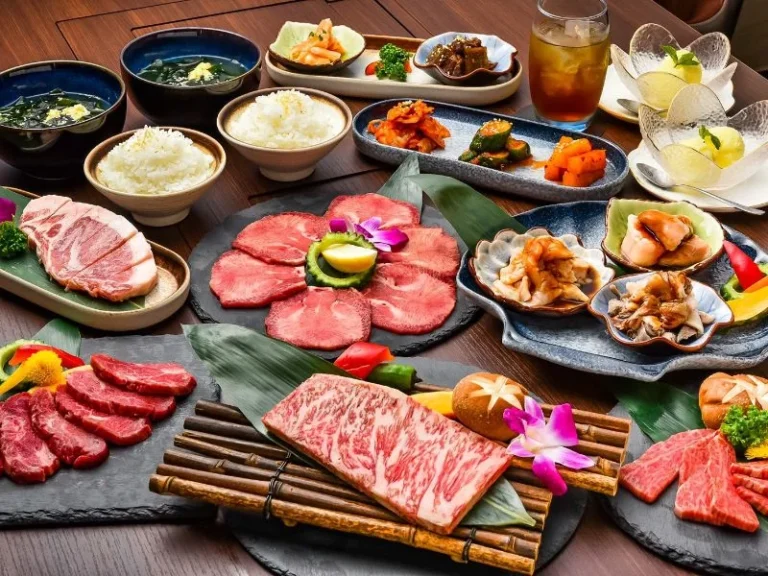
When visiting a Japanese yakiniku restaurant, most people want to experience wagyu with its evenly distributed marbling and melt-in-your-mouth texture. Some yakiniku restaurants even categorize wagyu by origin, grade, and cut!
Wagyu is divided into four main types: Japanese Brown (赤毛), Japanese Shorthorn, Japanese Black (黒毛), and Polled (無角). Famous wagyu regions include Kobe, Omi, and Matsusaka.
The grades you often hear, such as A5, are determined by yield and meat quality. Letters A–C indicate the yield (amount of meat obtainable from the cow), while the meat quality is evaluated based on fat color, marbling, and meat color. Therefore, A5 represents the highest grade wagyu.
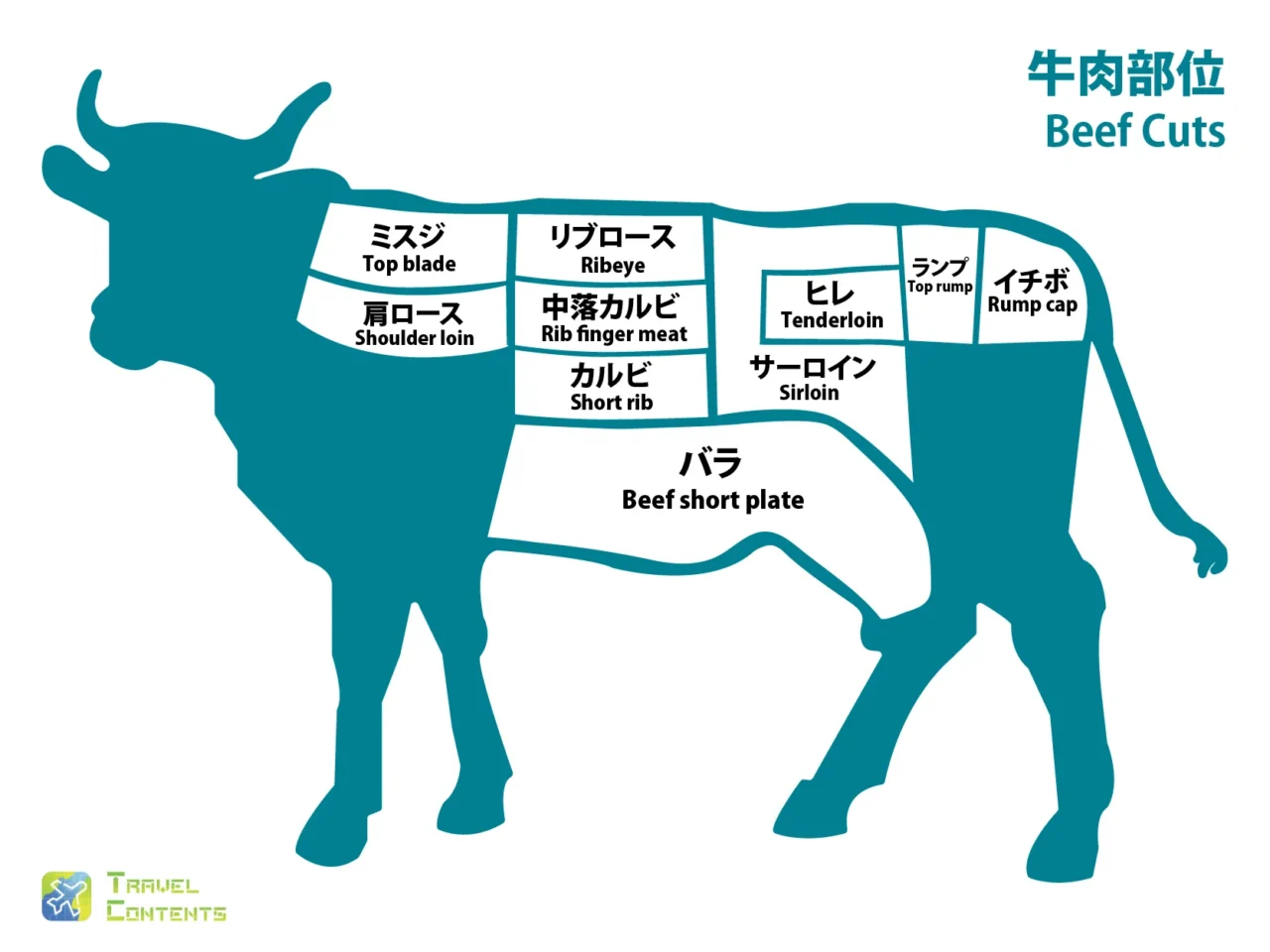
Here’s a guide to common wagyu cuts:
| Japanese | English |
| ミスジ(misuji) | Top blade |
| A rare cut located on the inner side of the shoulder blade, with fine marbling. | |
| 肩ロース(katarōsu) | Shoulder loin |
| Firm yet tender meat with moderate fat content. | |
| リブロース(riburōsu) | Ribeye |
| Tender and juicy, with a rich, full-bodied flavor. | |
| 中落カルビ(nakaochikarubi) | Rib finger meat |
| Exceptionally tender with rich, flavorful fat, offering a juicy bite with a satisfying chew. | |
| カルビ(karubi) | Short rib |
| Richly marbled, with a melt-in-your-mouth texture. | |
| バラ(bara) | Beef short plate |
| Similar to karubi, with abundant marbling and a rich flavor; juicy and succulent when grilled. | |
| サーロイン(sāroin) | Sirloin |
| Firm texture with a satisfying chew. | |
| ヒレ(hire) | Tenderloin |
| The most tender part of the beef, almost free of sinew, low in fat, and delicate in texture. | |
| ランプ(ranpu) | Top rump |
| Firm and elastic in texture, with low fat content. | |
| イチボ(ichibo) | Rump cap |
| Located between the sirloin and rump, lean with some fat, tender in texture. | |
Top 5 Must-Try Yakiniku Restaurants in Japan!
Jojoen|The Top Choice for Premium Luxury Yakiniku!
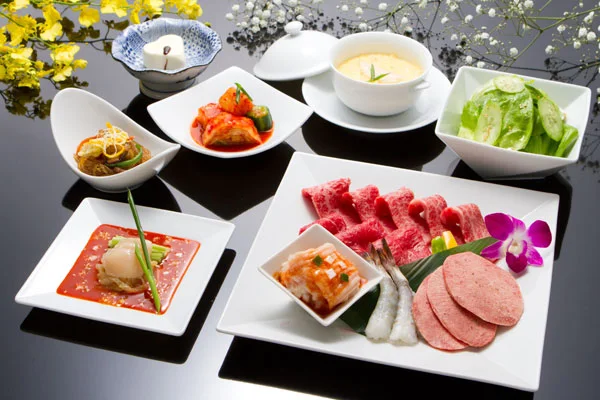
Image Source:PR TIMES
When it comes to Japanese yakiniku, you can’t miss the iconic Jojoen (敘敘苑/叙々苑). Known for its high-end dining, it offers both set menus and à la carte options. Famous for carefully selected wagyu, attentive service, and a premium dining environment, its signature sauces are aromatic, and the meat is tender and melts in your mouth—a luxurious yakiniku experience many travelers dream of.If your budget is tight but you still want to try it, we recommend visiting before noon for a business lunch, which is more affordable.
- Price Range: Approximately ¥3,200 – ¥27,000
- Branch Locations
Yakiniku King | A Must-Try for Family Trips! High-Value All-You-Can-Eat
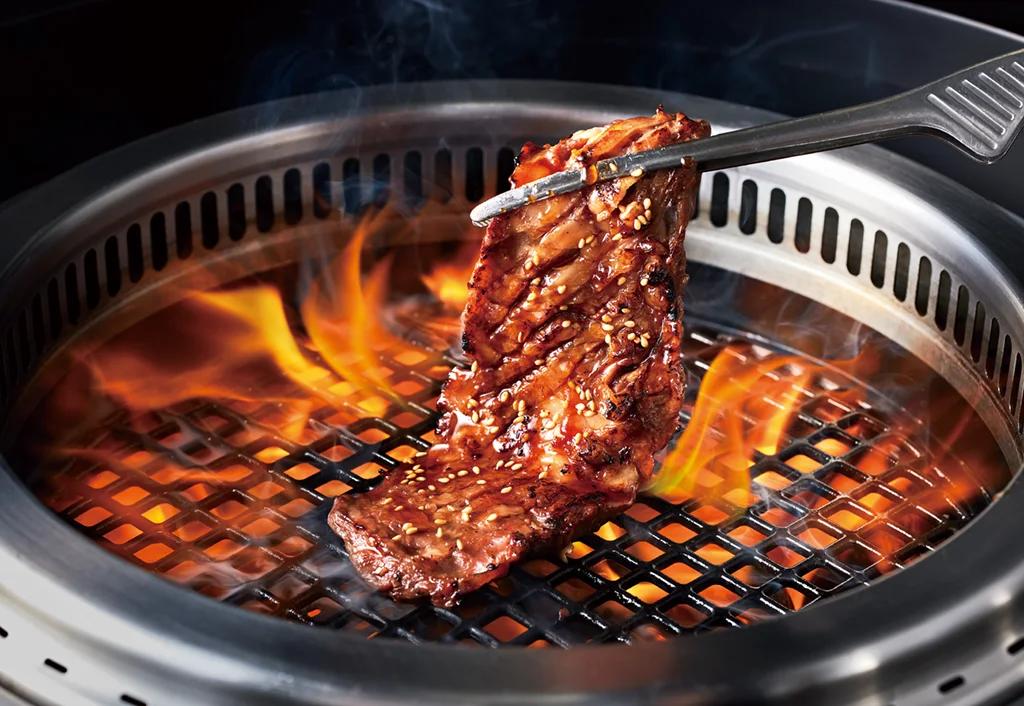
Image Source:PR TIMES
Yakiniku King (焼肉きんぐ) is a popular all-you-can-eat yakiniku chain loved by families. It offers three price tiers, a wide variety of meats, and the option to add unlimited drinks. Affordable yet packed with value, it’s the perfect choice when you want to indulge in a meaty feast!
- Price Range:Approximately ¥3,500 – ¥5,000
- Branch Locations
ABURIYA|Carefully Selected Meats, High-Quality All-You-Can-Eat Restaurant
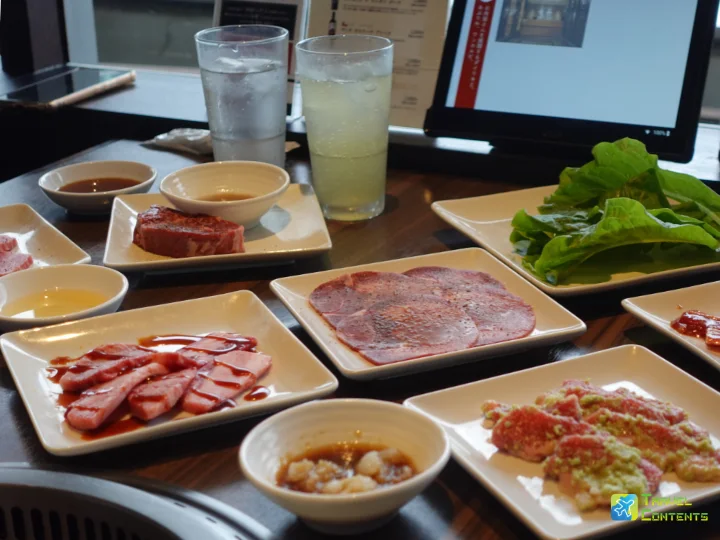
Formerly a specialty meat shop, ABURIYA (あぶりや) brings years of expertise in meat handling, maintaining high standards in cut selection and quality control. Each slice of meat is carefully trimmed by professionals to ensure the best texture. Even as an all-you-can-eat restaurant, the quality of the meat remains excellent—every order is a guaranteed delight!
If you’re looking for a more refined dining experience, try ABURIYA Arata from the same group (not all-you-can-eat). The restaurant specializes in high-quality Japanese Black Wagyu, with meticulous attention to both the meat and its presentation. Each dish delivers a truly impressive and flavorful experience.
If you want to enjoy ABURIYA or ABURIYA Arata at a discounted price, don’t forget to use the Have Fun in Kansai Pass to redeem special vouchers! Enjoy delicious meals while saving a little extra.
- Price Range:Approximately ¥3,500 – ¥5,000
- Branch Locations
Yakiniku TORAJI|Must-Try Thick-Cut Yakiniku in Tokyo!
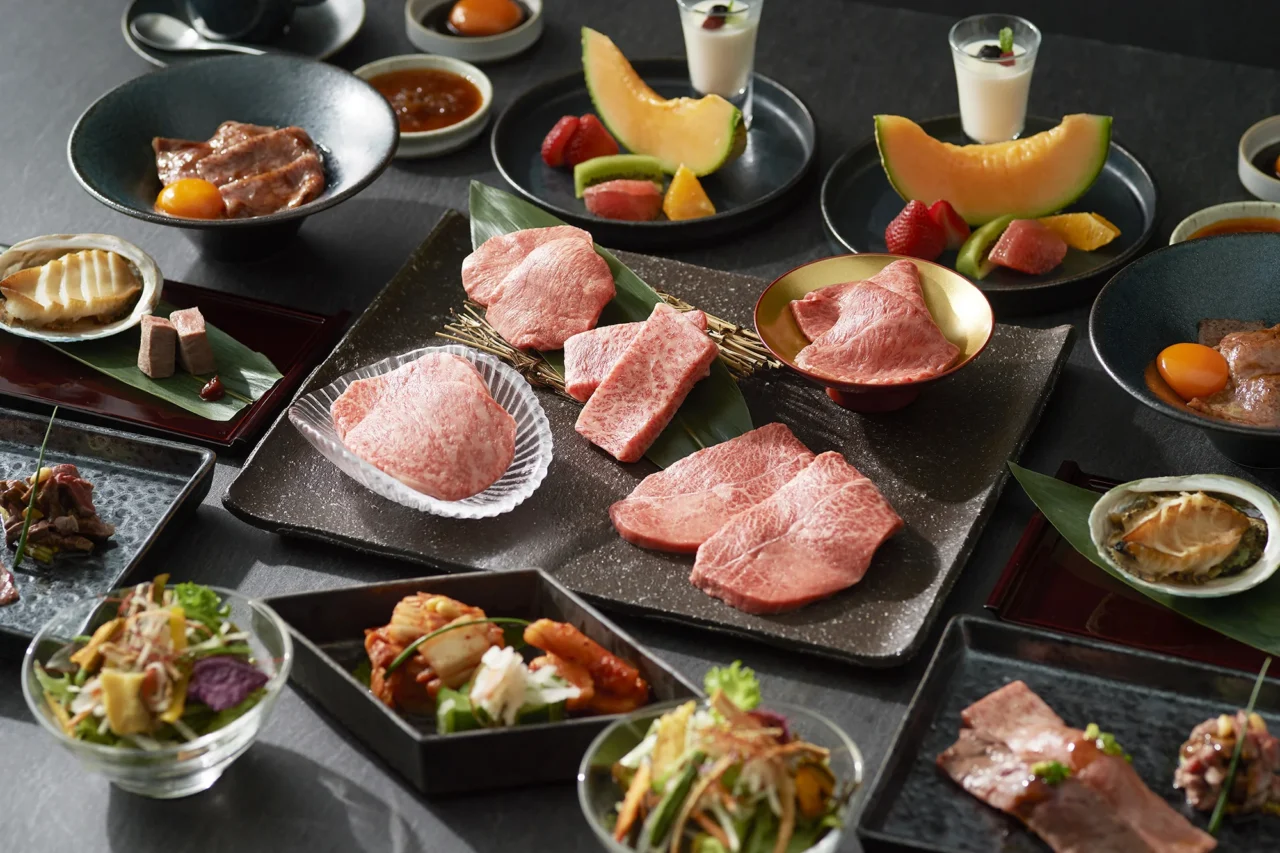
Image Source:TORAJI
Yakiniku Toraji (焼肉トラジ) was first established in Ebisu, Tokyo, and is famous for its thick-cut meat, with the signature dish being thick-cut beef tongue. Most locations are concentrated in the Kanto region, with a few branches in Osaka, Kyoto, and Fukuoka. While it is not an all-you-can-eat restaurant, the generous portions and high quality ensure a satisfying dining experience.
- Price Range: Approximately ¥6,600 – ¥13,000
- Branch Locations
Sumibi Yaki Jujuan | Local Wagyu in Tottori! Experience the Flavors of Local Ingredients
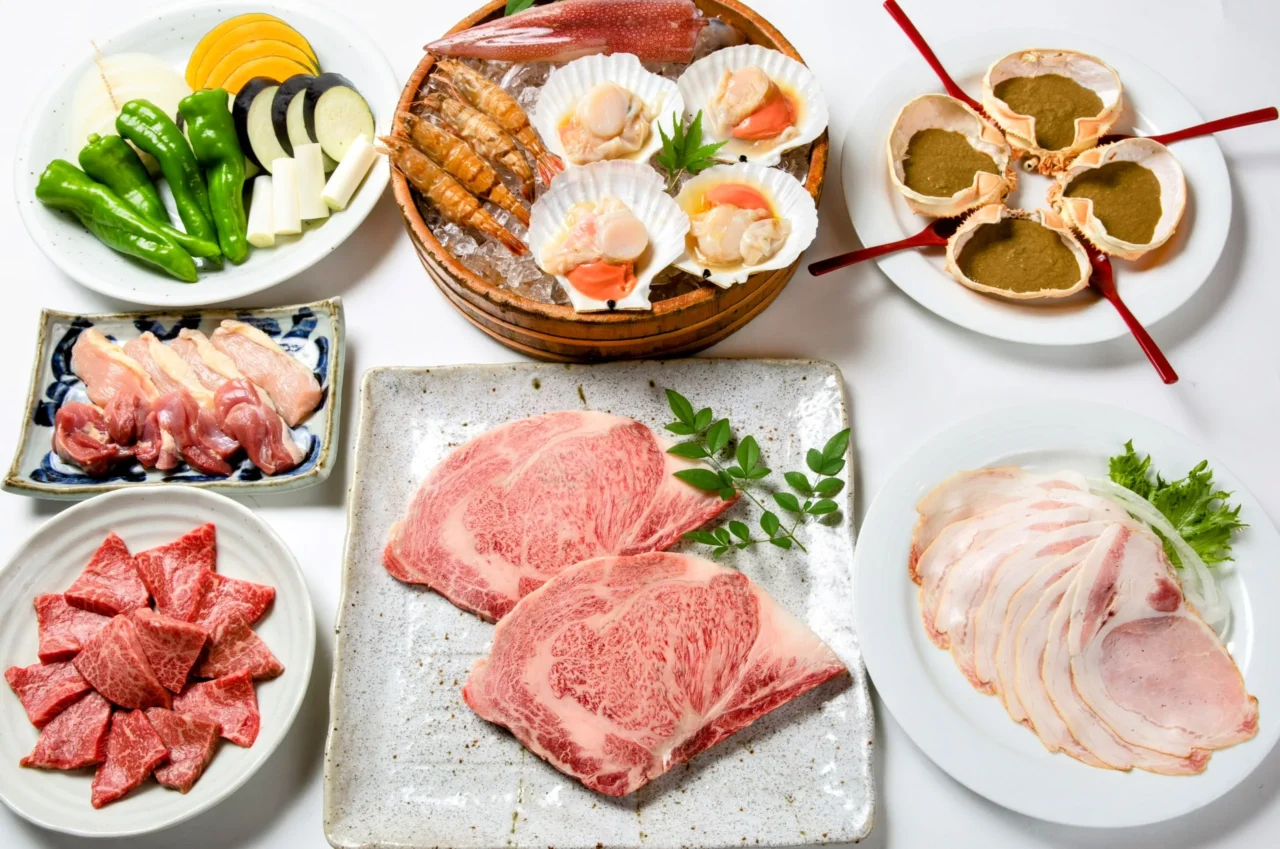
Located near JR Tottori Station, Sumibi Yaki Jujuan (炭火焼ジュジュアン) is renowned as a specialty Tottori wagyu restaurant. All meats and ingredients are sourced locally. Guests can choose from set meat platters or à la carte options. In addition to high-quality wagyu, seasonal seafood is also available, allowing diners to savor the freshest local flavors.
If you want to enjoy Sumibi Yaki Jujuan at a discounted price, don’t forget to use the Have Fun in Tottori Pass to redeem special vouchers! Enjoy delicious meals while saving a little extra.
- Price Range: Approximately ¥7,600 – ¥18,000
- Address: 751 Suehiro Onsen-cho, Tottori City, Tottori
- Official Website
※Menu items and prices may vary depending on the branch location or dining time. The prices listed above are for reference only; please refer to the on-site announcements at each restaurant for the actual cost.
Whether you’re seeking melt-in-your-mouth premium wagyu or a high-value all-you-can-eat experience with family and friends, Japanese yakiniku restaurants have you covered! On your next trip to Japan, consider picking a yakiniku restaurant to enjoy the smoky aroma of the grill and the delicious flavors of high-quality meat, creating a truly satisfying dining experience!
FAQ
Q: Is there a recommended order when eating Japanese BBQ (yakiniku)?
A: It’s generally recommended to start with lightly seasoned or non-marinated cuts to enjoy the original flavor of the meat, such as beef tongue (which has less fat). After that, move on to marinated or strong-flavor cuts, which also prevents sauce from burning on the grill too early.
Q: What’s the average price for yakiniku in Japan?
All-you-can-eat yakiniku restaurants (like King Yakiniku) usually cost around 3,500 to 5,000 yen per person. At high-end restaurants like Jojoen, prices can range from about 3,200 to 27,000 yen depending on the menu.
If you want high-quality yakiniku on a budget, look for lunch sets, as they are usually much more affordable.
Q: What menu items are must-tries at a yakiniku restaurant in Japan?
A: Besides wagyu, it’s highly recommended to try the offal cuts (horumon), such as the cow’s four stomachs or the diaphragm cut (harami).