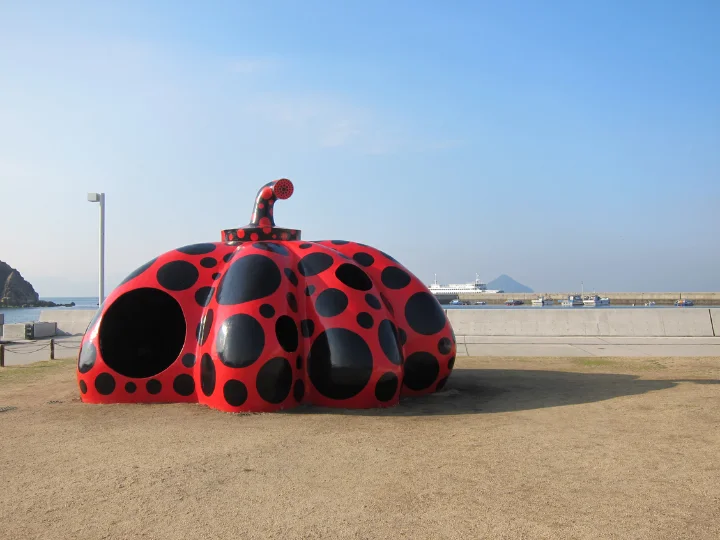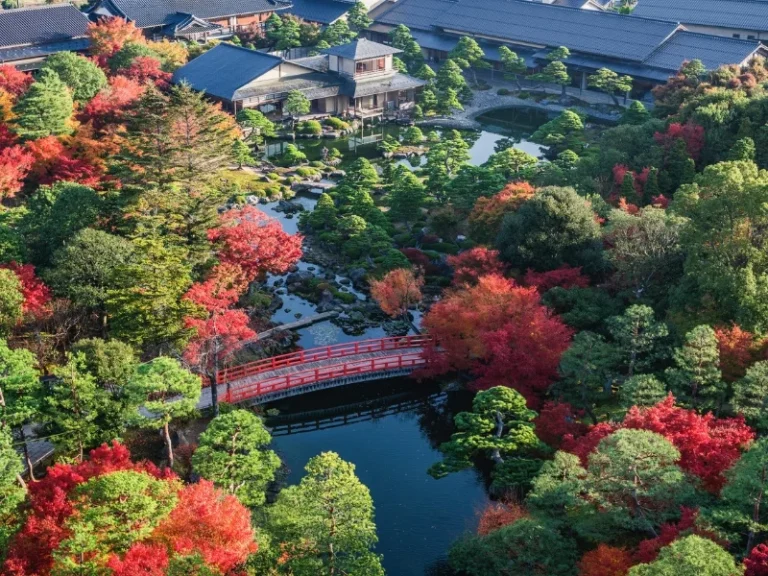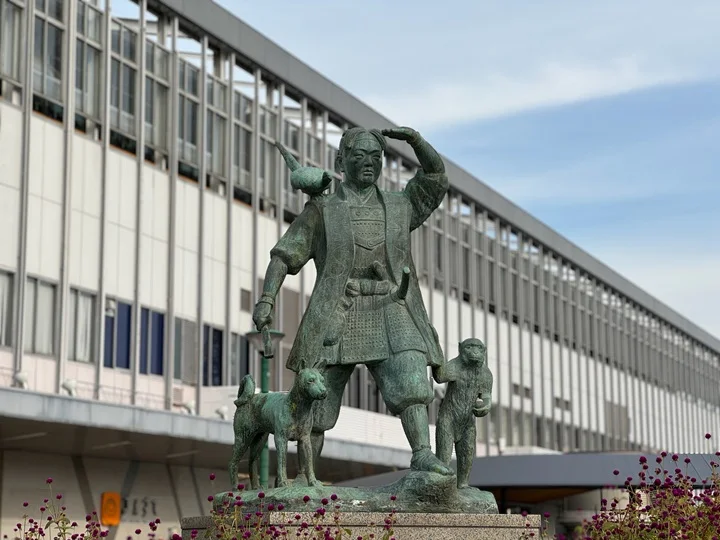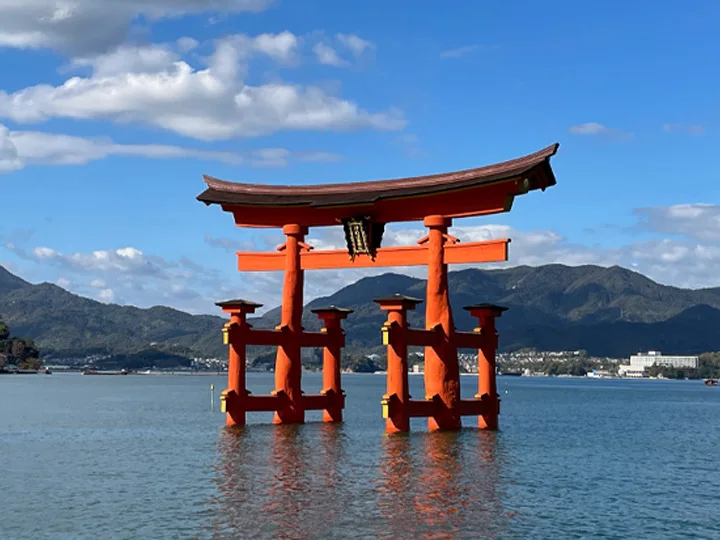


If you want to explore Japan in depth, renting a car and self-driving is a top choice for many travelers! It frees you from train schedules and the hassle of carrying luggage, allowing you to travel to your desired destinations with ease.
This guide will cover everything you need to know about car rental in Japan, including vehicle selection, insurance options, traffic rules and road sign recognition, as well as emergency procedures in case of an accident—helping you gain a full understanding of self-driving in Japan and enjoy a safer, more worry-free journey!

Image Source:photoAC
Car Rental in Japan: Vehicle Types and Cost Guide
Recommended Car Rental Companies & Booking Websites
There are many car rental companies in Japan, so it’s recommended to start with well-known brands such as Toyota, ORIX, Nissan, Nippon, Budget, OTS, and Times.
If you want to compare prices across multiple companies at once, platforms like Travel、Tabirai are highly recommended. By simply entering your rental dates and pick-up/drop-off locations, you can easily view various rental plans and prices at a glance!
If you have basic Japanese skills, it is recommended to use the Japanese version of the websites. In some cases, you may find a wider selection of vehicle types, and prices can also be slightly cheaper.
Differences Between Vehicle Types
| Models | Features | |
| Alto、N-Box | Light Kei Car
(K-Car) |
Suitable for 2–3 passengers, this vehicle is compact and easy to park, with good fuel efficiency. However, stability may be slightly reduced when driving on highways or in strong winds. |
| YARIS、ROOMY、 Note e-POWER、SIENTA | Compact Car | Suitable for 2–3 passengers, this vehicle is ideal for long-distance travel, with a trunk size that is just right for small luggage. |
| Corolla Cross、RAV4 | Mid-size Car | Suitable for 5–6 passengers, this vehicle offers spacious and comfortable seating, with flexible luggage capacity. |
The vehicle types listed above are among the most common choices for self-driving travelers in Japan. Additionally, please note that although many models are labeled as “5-seaters,” it is still important to pay attention to the size and number of luggage items.
It is recommended to check detailed information or videos of the specific model before booking to ensure that the trunk space and interior storage capacity are sufficient for your needs.
Three Main Types of Car Rental Insurance in Japan

Image Source:photoAC
Driving in an unfamiliar place can naturally feel a bit uneasy. In this regard, Japanese car rental companies usually offer various bundled insurance plans, which are often more cost-effective than purchasing coverage separately. If you are driving in Japan for the first time, it is recommended to purchase both CDW and NOC coverage for better protection.
Common Car Rental Insurance Options in Japan
| Insurance Type | Coverage | Description |
| Included in the rental fee | ・Bodily Injury Liability: Unlimited per person
・Property Damage Liability: Unlimited per accident (subject to deductible) ・Vehicle Damage Coverage: Up to the vehicle’s market value per accident (subject to deductible) ・Personal Injury Coverage: Up to JPY 30 million per person |
This insurance is typically included when renting the vehicle. However, in the event of an accident, the driver is still responsible for the deductibles for property damage and vehicle damage, as well as the NOC (Non-Operation Charge).
※ The deductible is usually around JPY 50,000–100,000. |
| Collision Damage Waiver
(CDW) |
Waives the deductible for “property damage” and “vehicle damage.”
(Price: from approximately JPY 1,100 per day) |
Requires additional purchase. Once added, the above deductibles will be waived in the event of an accident; however, the NOC (Non-Operation Charge) will still apply. |
| Non-Operation Charge
(NOC) |
Covers the compensation fee incurred when the vehicle requires repair or cleaning due to accidents, mechanical breakdowns, cigarette odor, or excessive dirt. | Requires additional coverage. Once purchased, the NOC (Non-Operation Charge) can be waived in the event of the above situations.
※ The NOC fee is usually around JPY 20,000–50,000. |
Important Notes on Using Japan’s Expressways
When renting a car and driving in Japan, expressways (highways) are generally toll roads. Fees vary depending on the distance traveled and specific routes, and can add up significantly for long-distance driving. It is recommended to estimate your route budget in advance and consider the following two payment methods:
- ETC (Electronic Toll Collection)
When renting a vehicle equipped with an ETC device, simply insert the ETC card into the in-car reader. As you pass through toll gates, slow down and the toll will be automatically deducted. The charges are usually settled in a single payment upon returning the vehicle.
- Cash payment
You will need to take a ticket at the entrance when entering the expressway. When you reach a manned or regular toll booth, please present the ticket and pay by cash or credit card.
Please note: most car rental companies provide vehicles equipped with an ETC device, but the ETC card is usually not included. If needed, some branches may offer ETC card rental for an additional fee; however, this is not available at all locations and may be subject to stock availability. It is recommended to confirm the ETC card rental policy and fees with each rental company before booking.
Before driving in Japan, learn the traffic rules first!
If you plan to drive in Japan, in addition to arranging insurance and choosing a vehicle, it is also important to understand local traffic rules and road signs in advance. Japan has very strict driving regulations, and even a small mistake may lead to violations or affect travel safety. Here are some key points for beginners:
Key Traffic Rules for Driving in Japan
| Traffic Rules | Description |
| Driver’s seat
and turn signal position |
Japan is a right-hand drive country (driving on the left side of the road). The driver’s seat is on the right side, the turn signal lever is on the right side, and the windshield wiper lever is on the left side. |
| Yield when turning right | When turning right, you must yield to through traffic and vehicles turning left, and only proceed when it is safe. |
| Pedestrians have priority | Regardless of whether there are traffic lights, vehicles must come to a complete stop and yield whenever pedestrians are about to cross the road. |
| Lane change | A solid yellow line indicates that lane changes are prohibited. A white dashed line indicates that lane changes are allowed when it is safe to do so. |
| Speed limit | In most cases, general road speed limits are 30–60 km/h, while expressways are 80–100 km/h. |
Rules for Traffic Lights with Arrow Signals
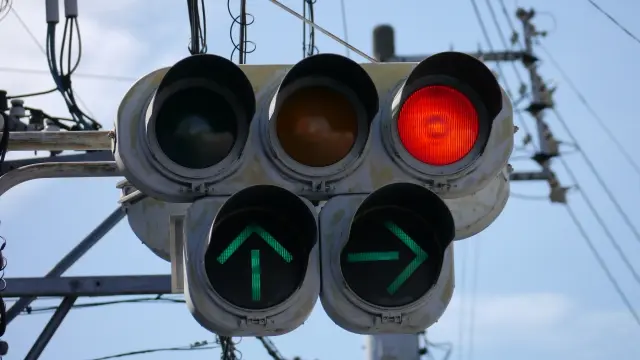
Image Source:photoAC
In the situation shown above, should you continue driving or not? Please remember the rule: you may proceed only when there is a green arrow indicating your intended direction. (In this case, the opposing traffic is currently stopped by a red light, and vehicles going straight or turning right are allowed to proceed.)
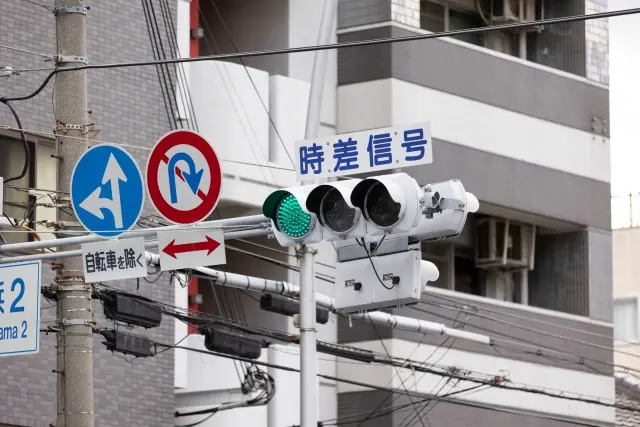
Image Source:photoAC
Sometimes you may see a “time-separated signal” above traffic lights. This means vehicles in a specific direction are allowed to go first, while other directions remain at a red light. The purpose is to reduce conflicts between turning and straight-moving traffic and improve overall road safety.
Common Road Signs Overview
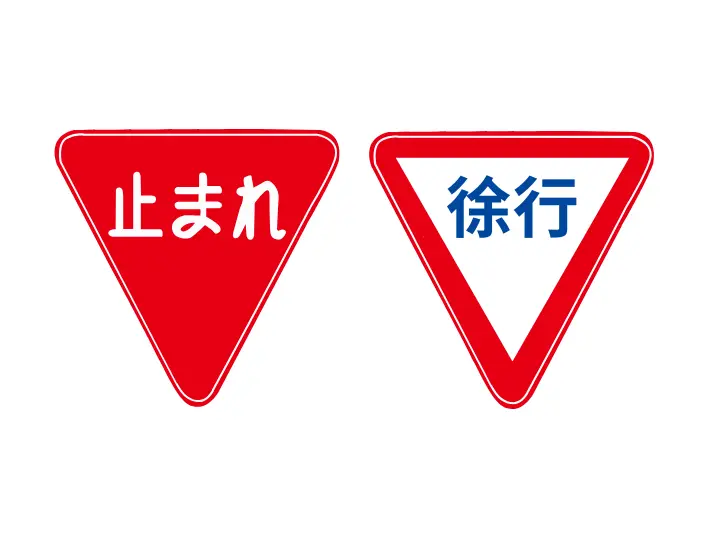
- 止まれ:Indicates “full stop.” You must come to a complete stop before the stop line, or if there is no stop line, stop before the sign. Proceed only after confirming it is safe.
- 徐行:Indicates “slow down.” You must reduce your speed significantly and stay alert for pedestrians and oncoming vehicles. It is commonly seen in residential areas, narrow roads, or near schools.
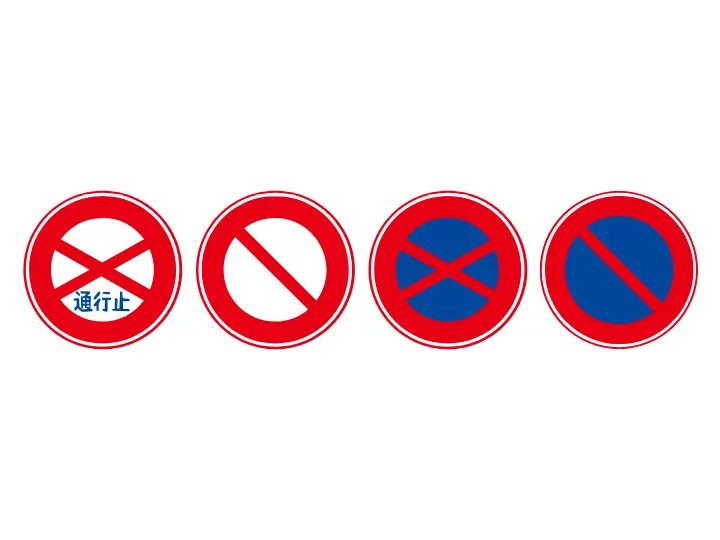
- No entry (as shown in the left image):Entry is prohibited for both pedestrians and vehicles.
- No vehicles allowed (as shown in the second image from the left):Pedestrians are allowed, but vehicles such as cars, motorcycles, and bicycles are prohibited.
- No stopping or parking (as shown in the second image from the right):Parking is completely prohibited, including temporary stopping.
- No parking (as shown in the rightmost image):Temporary stopping is allowed for short pick-up/drop-off or loading/unloading luggage, but long-term parking is not permitted.
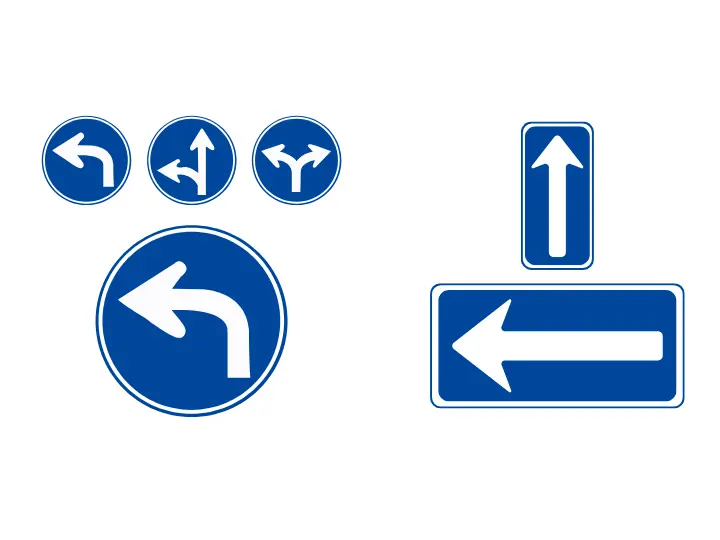
- One-way street (left image):Traffic is permitted in one direction only.
- Proceed in the indicated direction only (right image):Only the indicated direction is permitted at this intersection; the road may become two-way after passing it.
How to use MapCode navigation
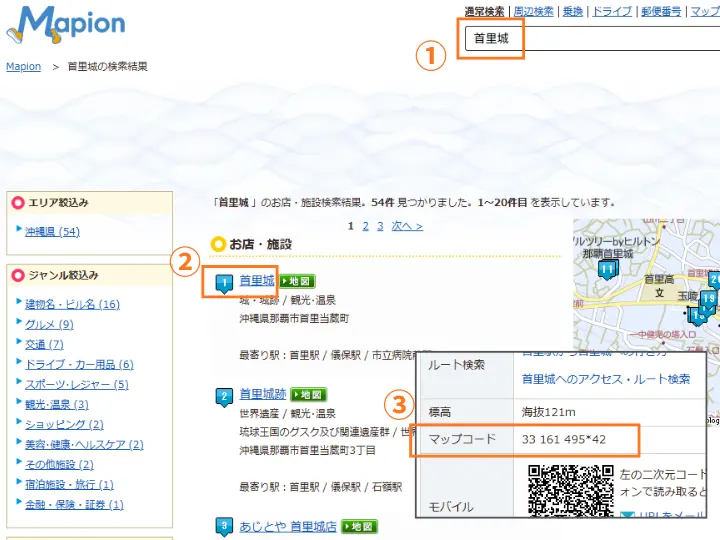
Image Source:Maption
When renting a car and driving in Japan, it is recommended to use “MapCode” to set your navigation destination. You can first search for your destination on websites such as Mapion to find the corresponding MapCode, then enter it into the car’s navigation system to quickly locate and reach your destination.
This method is more accurate than entering an address and helps avoid difficulties with Japanese input. If you are using an iPhone, you can also connect via CarPlay and use Google Maps for navigation as a helpful alternative, making the overall driving experience smoother.
Types of Fuel and Refueling Process at Gas Stations in Japan
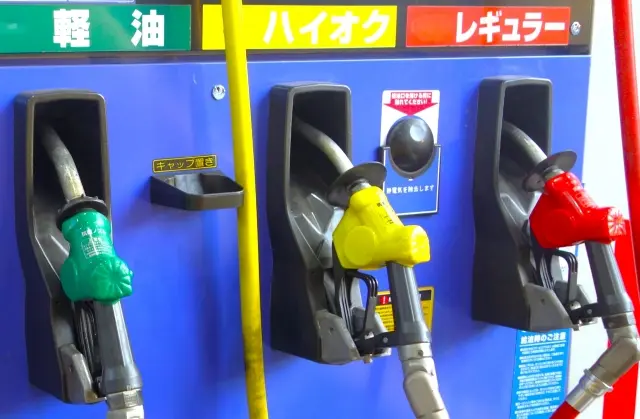
Image Source:photoAC
Gas stations in Japan are divided into three types: Green – Diesel (軽油 / keiyu), Yellow – High-octane gasoline (ハイオク / haioku), and Red – Regular gasoline (レギュラー / regular). They are also further divided into two types: full-service and self-service. At self-service stations, you can select your preference on the touchscreen, such as amount, liters, or choosing to fill up. The following are some commonly used Japanese refueling terms for your reference:
Quick Japanese Reference for Gas Stations in Japan
| Japanese | English | Japanese | English |
| 軽油
(keiyu) |
Diesel | 金額(kingaku) | Amount |
| ハイオク
(haioku) |
Premium unleaded 98 | 数量(suryo) | Quantity |
| レギュラー
(regular) |
Premium unleaded 95 | クレジットカード
(kurejittokatto) |
Credit Card |
| 満タン
(mantan) |
Fill up | 現金(genkin) | Cash |
💡 Note: When renting a car, the rental company will usually inform you of the required fuel type or specify recommended gas stations. If not, it is best to confirm with the company in advance to avoid any issues later. Most rental cars do not use diesel (軽油), and using the wrong fuel may cause the vehicle to fail to start!
Types of Parking in Japan
When looking for parking in Japan, if you see a sign that says “月極駐車場” (monthly parking), it means the parking lot is for monthly rental only and is not available for short-term parking. Please look for another parking area. Also, be sure to check for spaces marked “軽,” which indicate parking is only allowed for light vehicles (K-cars).
- Timed parking lot
The most common type of parking lot, usually an automated lift-style system. After parking, the platform under the vehicle will automatically rise. When leaving, you need to enter the parking space number at the payment machine. After completing payment and confirming that the platform has fully lowered, you can drive out of the parking lot.
- Metered parking
In some streets, you may see this type of metered parking space. It usually has a maximum parking time limit. You can only insert 100 yen coins, and overstaying may be considered illegal parking.
SOP for Handling a Car Accident While Driving in Japan
If you are involved in a car accident while driving a rental car in Japan, whether it is a collision or a minor scrape, you must stop the vehicle immediately and turn on the hazard lights. If necessary, move the vehicle to a safe location and place a warning triangle.
If anyone is injured, call 119 for emergency assistance first. Then contact 110 to report the accident to the police and inform the rental car company.
Be sure to take photos of the scene and exchange contact information with the other party. Finally, you must obtain an official accident certificate issued by the police; otherwise, insurance may not cover the damages, and you may be responsible for all related costs.
FAQs for Car Rental Self-Driving in Japan
Q:Is there an age requirement for renting a car in Japan?
In Japan, drivers must be at least 18 years old. However, some rental companies may require drivers to have held a license for at least one year, or to be at least 20 years old to rent a car. Please check each rental company’s policy before booking, as requirements may vary.
Q:Is insurance mandatory when renting a car in Japan? What types of insurance are available?
In Japan, rental car plans usually include compulsory insurance. However, in the event of an accident, you may still need to pay a deductible and loss-of-use charges. If you wish to reduce out-of-pocket expenses, it is recommended to add “CDW (Collision Damage Waiver)” and “NOC (Non-Operation Charge) coverage.”
Q:Do I need to rent an ETC card when renting a car in Japan?
Not necessarily. An ETC card is mainly used for automatic toll payment on expressways and may offer certain ETC discounts. It is recommended if you plan to use highways frequently. However, if you will only use expressways occasionally, you can use regular toll lanes instead and avoid the extra ETC card rental fee.
Planning a self-drive trip in Japan is actually not as difficult as it may seem. As long as you understand your driver’s license documents, rental process, insurance options, and traffic rules before departure, you can greatly reduce uncertainties during your journey. Whether you are driving through city streets or heading to hidden countryside spots, self-driving allows your trip in Japan to be more flexible and free!